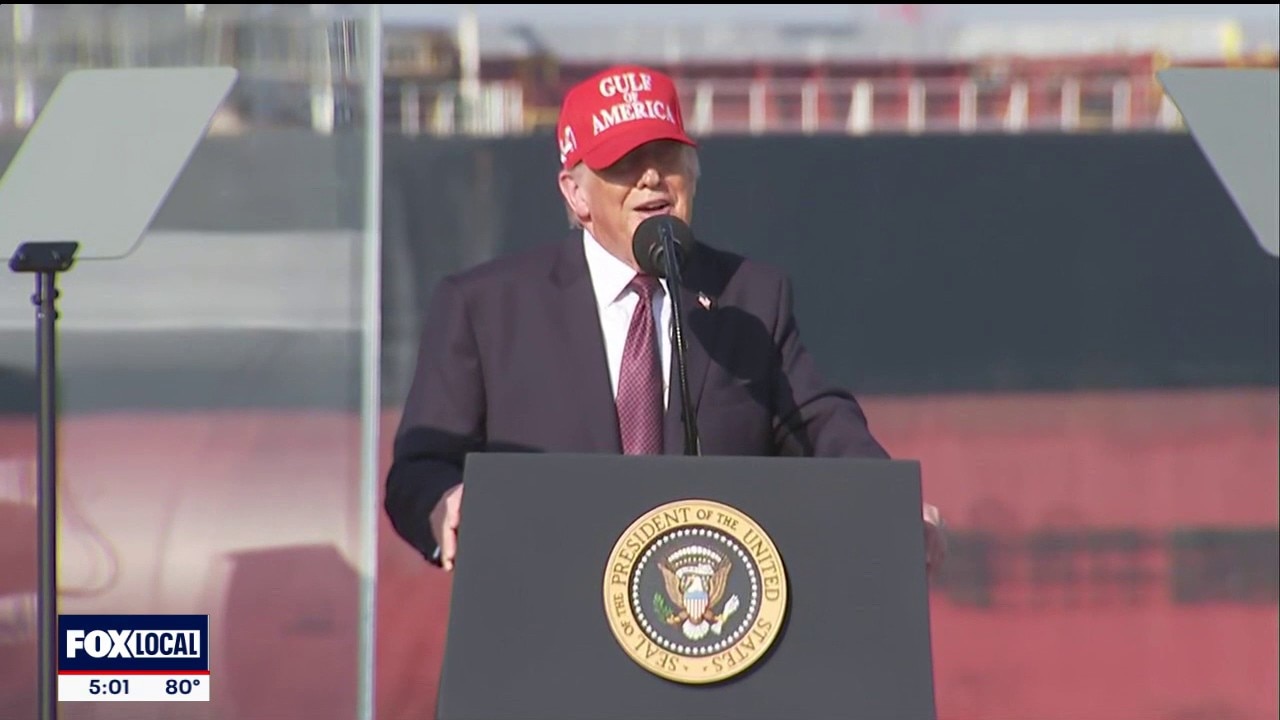
President Trump spoke at the Port of Corpus Christi to highlight energy and economic policies, touting increased oil and natural gas production and an improving economy while withholding an endorsement in the competitive Texas U.S. Senate primary (candidates John Cornyn, Ken Paxton and Wesley Hunt all attended). Political spending in the Senate contests has topped $110 million in advertising; Democrats' DCCC countered Trump’s claims, pointing to stalled home building, alleged damage to the domestic oil industry from tariffs and trade moves affecting Texas farmers, while Trump maintained endorsements in select House primaries (including Rep. Tony Gonzales and Eric Flores).
Market structure: Trump's Corpus Christi appearance is a confirmation signal to investors that federal policy rhetoric will remain pro-U.S. oil & gas, favoring producers, midstream tolling operators and port/terminal owners exposed to crude/LNG exports (Port of Corpus Christi). Direct winners: midstream (capacity fees, e.g., KMI, PAA) and large integrated producers (XOM, CVX); losers: homebuilders (DHI, LEN) and import-dependent builders if tariffs rise. Commodity impact: upside pressure on WTI/Brent would lift energy equities and inflation expectations, pressuring long-duration bonds and lifting short-term real yields. Risk assessment: Tail risks include abrupt tariff moves or export restrictions that could disrupt supply chains or crude flows, and legal/political shocks from high-profile Texas races that could drive regional regulatory shifts; probability low but impact high. Immediate horizon (days): volatility around Texas primaries and ad-spend flows; short-term (weeks–months): EIA weekly stocks, Baker Hughes rig count and monthly export throughput will reprice sector; long-term (quarters): permit/backlog changes and pipeline FID cycles matter. Hidden dependencies: port congestion, refinery intake constraints, and LNG shipping rates can mute export-driven upside. Trade implications: Favor 3–12 month exposure to midstream tolling and large integrated producers via equities and call spreads while trimming homebuilder cyclicals. Use relative-value: long KMI or PAA vs short DHI or XHB to capture divergence; buy 3-month 10–15% OTM call spreads on XOM/CVX sized 0.5–1% notional to limit capital with defined risk. Entry: initiate within 2–6 weeks; exit or re-rate on sustained WTI >$85 for 7 trading days or EIA crude exports up >10% MoM. Contrarian angles: The market underappreciates incremental margin capture by Gulf Coast midstream from higher export volumes—this is a tolling-style cash flow that can rerate multiples if sustained for 2–4 quarters (historical parallel: 2018 export buildout). Consensus may be overstating political risk; if Trump’s rhetoric continues without disruptive tariffs, energy names are under-owned. Unintended consequence: aggressive tariffs could actually boost domestic CAPEX in non-energy sectors, offsetting some housing weakness; monitor tariff announcements within 30 days as a volatility catalyst.
AI-powered research, real-time alerts, and portfolio analytics for institutional investors.
Request a DemoOverall Sentiment
mixed
Sentiment Score
0.00
Ticker Sentiment
