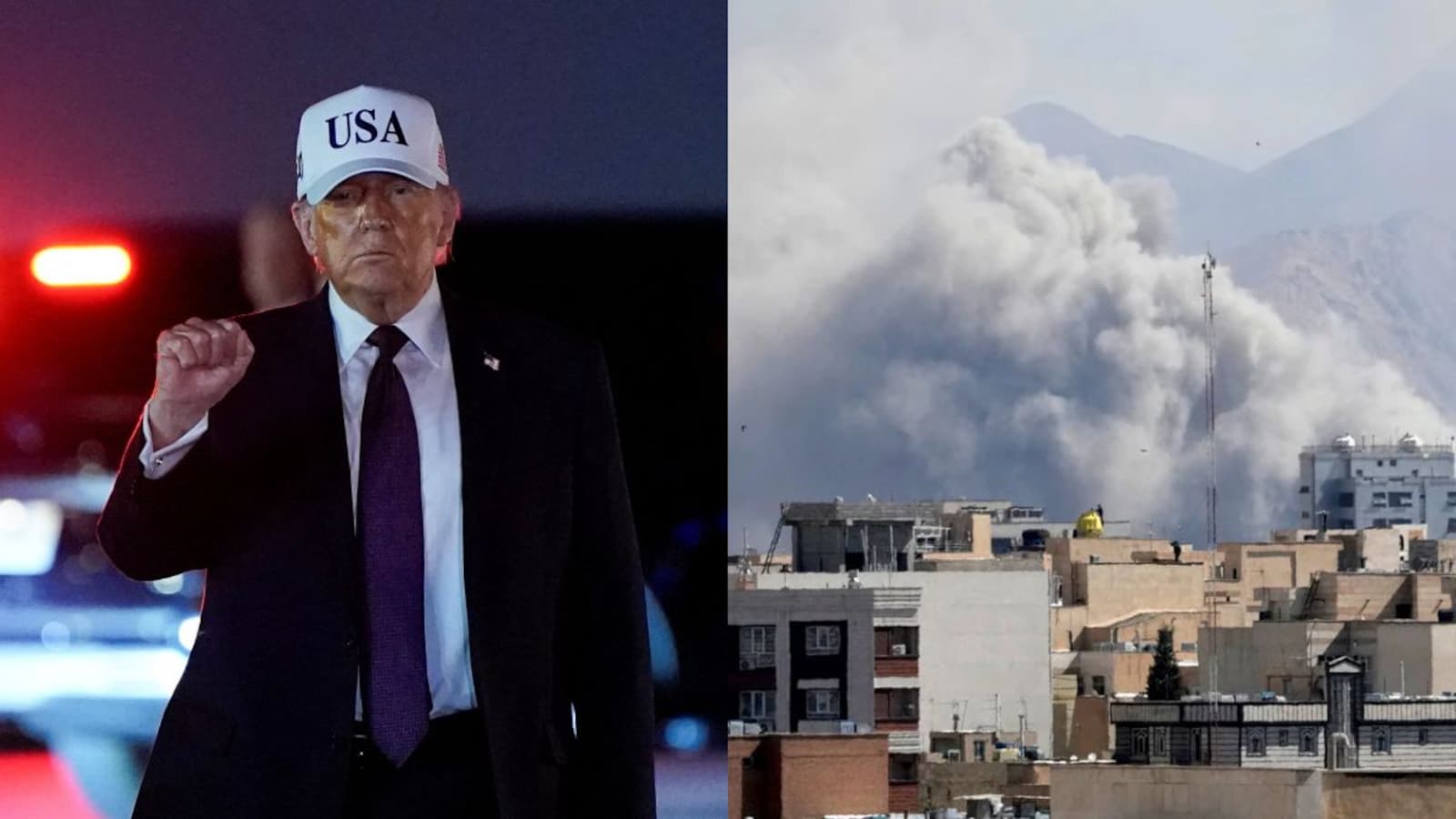
President Trump ended a two-hour White House meeting on Iran without a ceasefire deal, leaving disputes unresolved over the Strait of Hormuz, Iran’s nuclear program, and the release of frozen funds. Iran and the US are still negotiating, but both sides continue accusing each other of violating the April 8 truce, keeping tensions elevated around a waterway that carries about 20% of global oil flow. The standoff is likely to remain a significant risk for energy markets and broader geopolitical sentiment.
The market is underpricing how much of this negotiation is about option value rather than a binary ceasefire. Every additional day of ambiguity keeps a geopolitical risk premium embedded in crude, but the bigger second-order effect is on shipping insurance, tanker routing, and working-capital friction for Asian refiners that are exposed to Hormuz disruption. Even if a deal is announced, the path back to normal flow is likely slower than the headlines imply because mine clearance, verification of uranium disposition, and escort normalization are operational bottlenecks measured in weeks, not hours. The most interesting asymmetry is that energy equities may not move one-for-one with spot oil. Integrateds and E&Ps already price some tail risk, but refiners, airlines, and chemical names are more vulnerable to a volatility spike than a sustained higher price because crack spreads and input hedging reset faster than upstream volumes. If the standoff persists, the winners are not just producers; they are defense, maritime security, and US LNG exporters that benefit from Europe/Asia scrambling for non-Middle East supply optionality. The biggest contrarian read is that the market may be too focused on a near-term de-escalation headline and not enough on credibility. A deal that requires front-loaded financial relief before verifiable compliance is fragile; if either side feels the other blinked first, the truce can snap back within days, not months. That creates a classic short-vol setup: downside in crude from a genuine breakthrough is capped by residual supply uncertainty, while upside from a failed meeting or renewed strikes is fast and nonlinear. Politically, this is a domestic inflation and approval-rate problem for Washington as much as a foreign-policy one. If energy prices stay elevated into the next few weeks, the administration has incentive to force a narrative win, which increases the odds of rushed concessions or a temporary patch rather than a durable settlement. That favors tactical trading over strategic positioning: fade any immediate peace gap unless there is actual evidence of reopened shipping lanes and asset-release mechanics.
AI-powered research, real-time alerts, and portfolio analytics for institutional investors.
Request a DemoOverall Sentiment
moderately negative
Sentiment Score
-0.45
