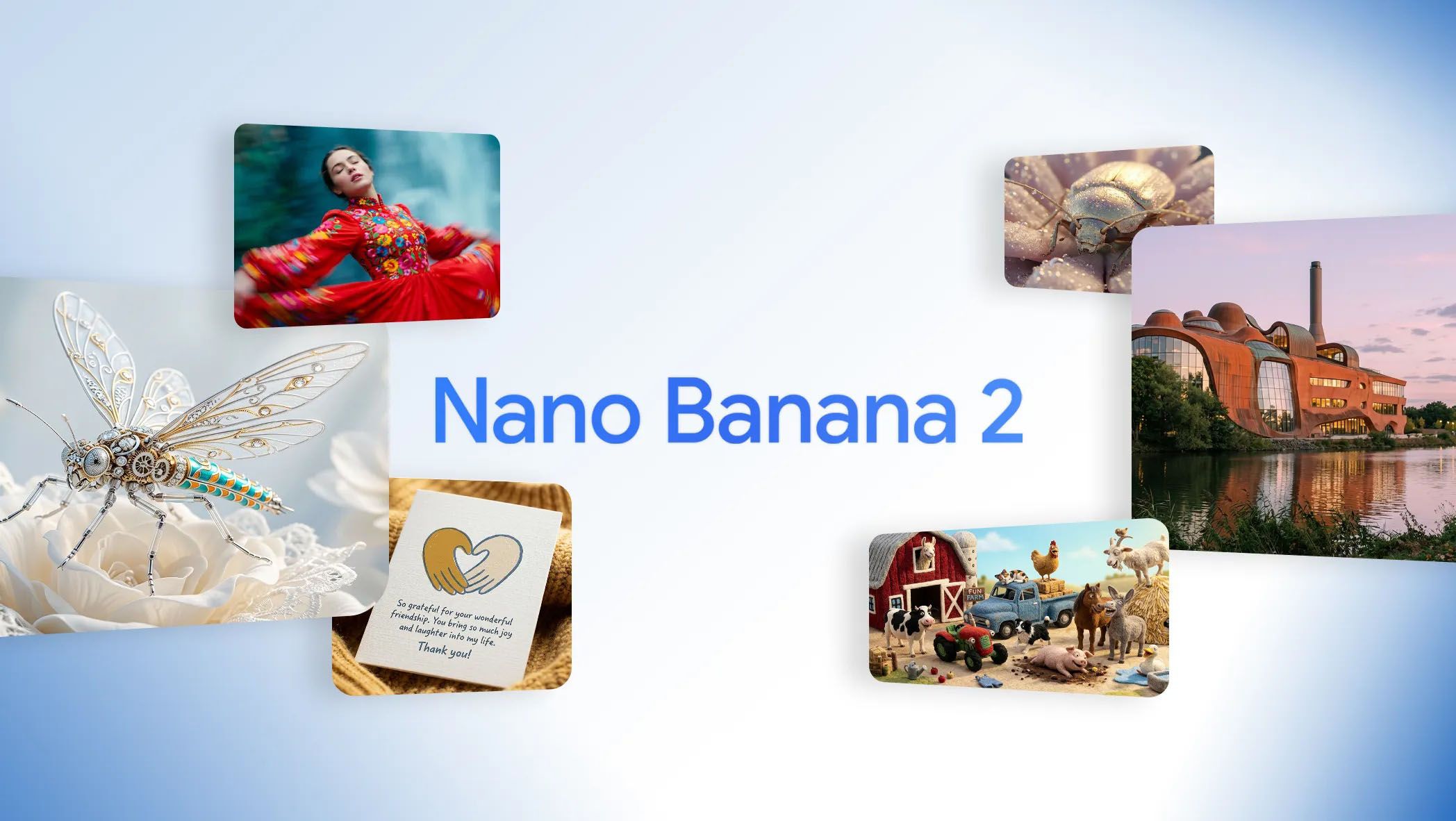
Google has quietly rolled out Nano Banana 2 as the image-generation engine powering Gemini’s Create Image feature, touting faster performance and improved compositional planning that yields higher-fidelity textures, accurate typography and stronger spatial and logical reasoning. Demonstrations show the model handling complex physical logic, localized fonts, and multi-subject scenes reliably, which could materially strengthen Google’s positioning in generative synthetic media and product differentiation against peers. While the upgrade enhances Google’s AI capabilities and competitive moat in creative AI products, it is unlikely to produce immediate material revenue or market-moving effects absent broader commercial integration or monetization milestones.
Market structure: Google (GOOGL) is the clear direct beneficiary — Nano Banana 2 strengthens Gemini’s product moat across search, ads, and workspace workflows and should incrementally boost cloud/API demand. Expect CPU/GPU suppliers (NVDA) and workstation vendors (DELL) to see correlated hardware demand; pure-play creative SaaS firms and small image-generation startups face margin and share pressure as models commoditize. This can translate into a modest revenue reallocation: +1–3% revenue lift for Google Cloud/Ads over 6–12 months if adoption scales, with NVDA demand rising on a similar timeframe. Risk assessment: Tail risks include regulatory action (EU AI Act, U.S. enforcement) with a 10–25% probability of material constraints or fines within 12–24 months, and IP/legal suits from training-data owners that could force product rollbacks. Operational risks (misinformation/hallucination incidents) can trigger quick reputational damage and ad revenue reversals in days–weeks. Hidden dependencies: continued NVDA GPU supply, model training costs, and third-party content licensing are single points of failure; catalysts include Google I/O, quarterly cloud/ads prints, and government AI guidance over the next 90–180 days. Trade implications: Favor concentrated, time-boxed exposure to GOOGL and NVDA while keeping size small (2–3% and 1–2% respectively) and use option structures to cap downside. Consider 6–9 month call spreads on GOOGL to capture product momentum; use short-dated hedges around earnings and I/O. Avoid large outright longs in pure creative SaaS; overweight DELL (0.5–1%) tactically to play workstation replacement cycles with 3–6 month calls. Contrarian angles: The market may underprice the difficulty of monetizing high-fidelity image generation — adoption does not equal immediate ad-dollar capture; historical parallel: mobile UX advances took multiple years to fully re-shape ad economics. Conversely, consensus may be underestimating open-source or enterprise on-prem alternatives that cap cloud pricing power. Unintended consequence: rapid quality gains could compress per-image prices, limiting TAM expansion and favoring hardware/infra suppliers over software ASP growth.
AI-powered research, real-time alerts, and portfolio analytics for institutional investors.
Request a DemoOverall Sentiment
moderately positive
Sentiment Score
0.45
Ticker Sentiment
