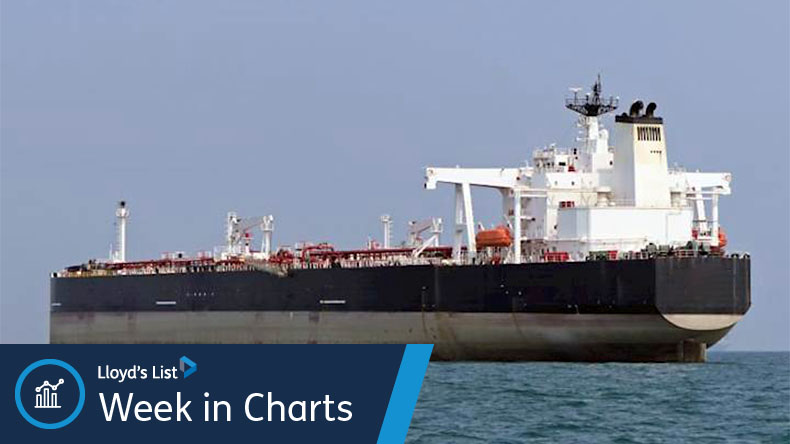
More than 600 vessels remain trapped in the Middle East Gulf, including 325 tankers, 154 of them laden, as conflict and conflicting political signals keep shipping flows disrupted. Strait of Hormuz traffic rose 26% week on week to 72 cargo transits, but volumes are still more than 90% below pre-war levels and are being driven largely by Iran-linked trade. The article also notes four shadow-fleet vessels have reverted to compliant loadings, underscoring how geopolitical shifts and sanctions risk are reshaping tanker routes.
The market is still pricing this as a static chokepoint story, but the real edge is in the repricing of counterparty risk. When sanctioned or shadow tonnage can flip back into compliant trades, the spread benefit does not accrue evenly: it compresses earnings visibility for legitimate spot-sensitive operators while expanding optionality for vessels and traders with the ability to switch registries, cargo origin, or insurance coverage quickly. That favors asset-light intermediaries and firms with flexible chartering books over owners locked into longer-duration exposure. The harder signal is that the constraint is now operational, not just political. A backlog of trapped tonnage creates a near-term shortage of available hulls in the region, which can keep day rates elevated even if crude flows normalize faster than feared. But once the congestion clears, the second-order effect is a release of latent shipping capacity into the broader market, which can pressure rates outside the Gulf and flatten the spread between high-risk and standard routes over the next 4-8 weeks. The paradox is that escalating uncertainty can be bearish for global trade volumes while bullish for specific routing and compliance optionality. Panama Canal transit strength suggests some cargo is already rerouting rather than stopping, which supports tanker and product-tanker miles even if headline throughput weakens. The main downside risk is a sudden diplomatic de-escalation: that would unwind the scarcity premium in maritime logistics faster than it resolves, leaving anyone long disruption exposed to a sharp mean reversion. Consensus is underestimating how quickly the shadow fleet can be monetized into compliant trades when sanctions enforcement becomes uneven or politically ambiguous. That suggests the durable edge is not directional on crude, but on relative winners from route complexity, documentation friction, and insurance scarcity. The trade is to own the bottlenecks, not the barrels.
AI-powered research, real-time alerts, and portfolio analytics for institutional investors.
Request a DemoOverall Sentiment
neutral
Sentiment Score
-0.08
