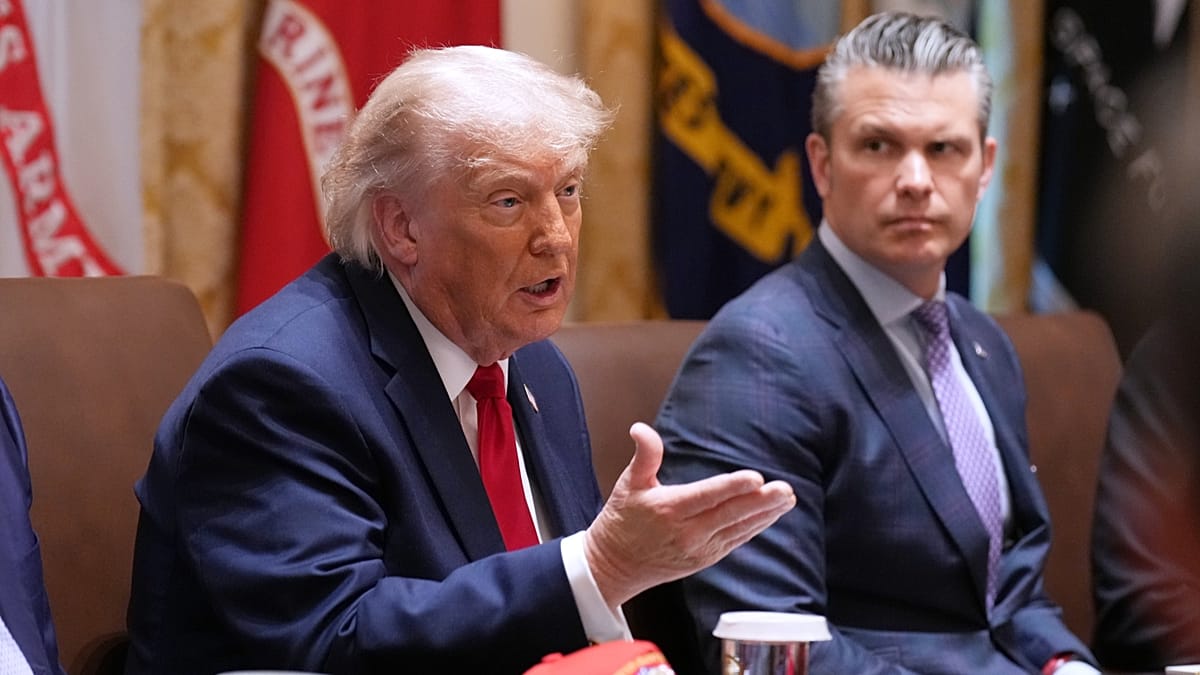
A potential 60-day Iran ceasefire extension and nuclear talks remain unsigned after Trump’s two-hour White House meeting, leaving the agreement unresolved. The US said it is "more than capable" of resuming war if needed, while both sides continue accusing each other of ceasefire violations. The key market risk is renewed Middle East conflict and possible disruption to shipping through the Hormuz Strait, which could affect energy and global logistics markets.
The market should read this less as a binary peace headline and more as an extension of the status quo: a managed ceasefire with an elevated probability of episodic strikes, cyber activity, and maritime harassment. That regime is usually worse for transportation and inventory efficiency than outright war because shippers must price in uncertainty without the clearing mechanism of a durable settlement. The immediate second-order effect is a higher risk premium across Middle East routing, insurance, and defense readiness budgets, even if crude does not sustain a large spike. Energy is the most sensitive transmission channel, but the bigger move may be in refined products and freight, not Brent itself. If Hormuz risk remains unresolved, Asian refiners and European importers are forced to carry more working capital and diversify sourcing, which supports tanker rates, LNG logistics, and bunker fuel volatility over the next 1-3 months. At the same time, any diplomatic delay keeps optionality alive for a fast downside reversal in oil if markets conclude the ceasefire is being reinforced rather than broken. Defense is a slower-burn beneficiary than the headline suggests. The key is replenishment: if both sides continue testing the ceasefire, inventories of interceptors, strike munitions, and ISR assets get drawn down faster than budgets can be reallocated, which is constructive for primes with missile-defense exposure and for smaller suppliers in the munitions chain. The contrarian point is that a stalled deal can actually be bullish for select defense names without being bullish for the broad market, because the Pentagon’s spending response tends to lag the geopolitical headline by quarters. The market may be overpricing immediate escalation and underpricing prolonged ambiguity. That ambiguity is tradable: it supports volatility, cross-asset dispersion, and relative-value opportunities more than a clean directional bet. If talks are ultimately extended again, the unwind in crude and shipping could be sharp, while defense order expectations would stay intact longer than the news cycle implies.
AI-powered research, real-time alerts, and portfolio analytics for institutional investors.
Request a DemoOverall Sentiment
mildly negative
Sentiment Score
-0.35
