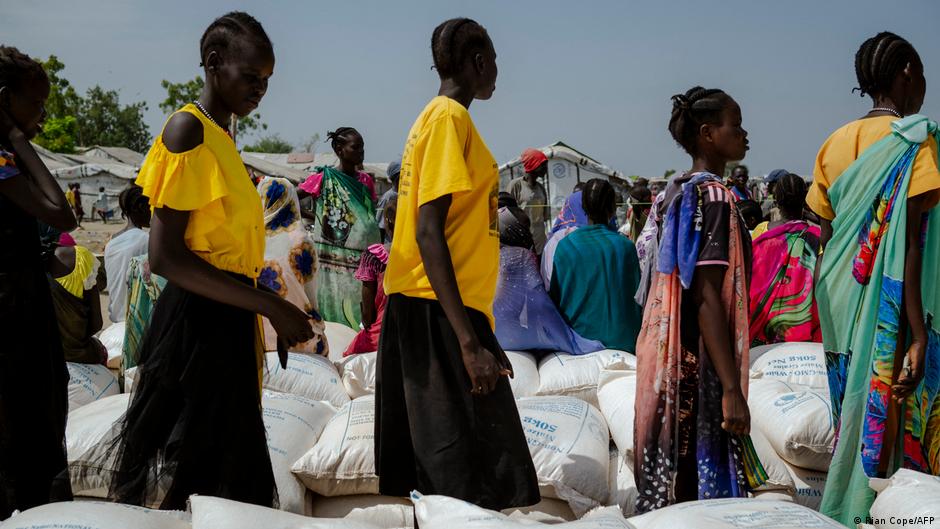
Sudan’s war has killed around 150,000 people, displaced about 12 million, and left more than 33 million reliant on aid, making it the world’s worst humanitarian crisis. The Berlin conference is focused on securing new donor pledges after global contributions fell from $2.07 billion in 2024 to $1.77 billion in 2025, with Germany adding €20 million and the UK pledging about €168 million for 2026. The conflict’s escalation, including drone attacks and spillover risk to Chad, keeps this a major geopolitical and aid-funding issue.
This is not a direct market event, but it is a durable risk premium event for Europe-facing sovereigns, aid budgets, and defense/logistics allocations. The second-order market effect is that Sudan remains a low-probability/high-severity tail that can worsen regional instability in Chad, the Red Sea corridor, and broader Sahel migration routes, raising political pressure on European governments already under fiscal strain. That combination tends to bias toward incremental spending on border security, surveillance, drones, and humanitarian logistics rather than any meaningful stabilization upside. The more investable read is that donor fatigue is now the binding constraint, not headline urgency. As aid gets crowded out by Ukraine and Middle East priorities, the marginal euro is more likely to come from reallocated budget lines than fresh aggregate spending, which is bearish for European fiscal flexibility and neutral-to-positive for contractors and NGOs with framework agreements. If conflict spillover intensifies, the first market response would likely be a modest bid in European defense and security names tied to ISR, counter-UAS, and border systems, not heavy weapons. Contrarian angle: the market may be underpricing how quickly a Sudan-to-Chad spillover can feed into migration politics in France, Germany, and Italy, which would extend the life of the issue beyond a humanitarian headline cycle. The other underappreciated channel is shipping and insurance around the Red Sea-Sahel nexus: even without direct disruption, higher perceived regional instability can lift risk premia for insurers, logistics operators, and African EM sovereign spreads. The key catalyst window is 1-3 months, when conference pledges either disappoint or get operationalized into budget commitments; absent a ceasefire, the story becomes a slow-burn fiscal and security trade rather than a one-day news shock.
AI-powered research, real-time alerts, and portfolio analytics for institutional investors.
Request a DemoOverall Sentiment
extremely negative
Sentiment Score
-0.85
