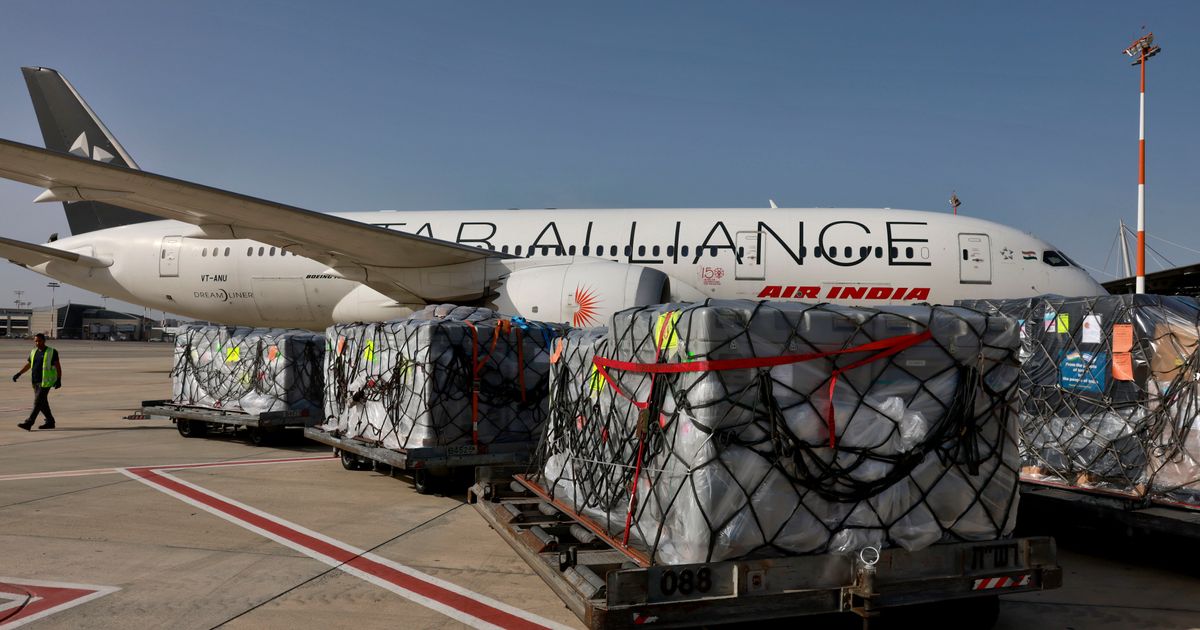
An Israeli and U.S. attack on Iran prompted widespread airspace closures across the Middle East (including Israel, Qatar, Syria, Iran, Iraq, Kuwait and Bahrain) and operational restrictions in the UAE, triggering mass flight cancellations and diversions; Cirium and FlightAware reported at least 850 Middle Eastern airline cancellations and over 1,000 Dubai/Abu Dhabi cancellations, with major carriers and regulators designating much of the region as high-risk. The disruption stranded tens of thousands of travelers, forced reroutes to European airports, and prompted airlines to issue waivers and suspend routes, creating immediate revenue, fuel and operational cost pressures for carriers and potential knock-on effects for logistics, insurers and regional markets if closures persist beyond several days.
Market structure: Immediate winners are energy producers and defense contractors (upward pressure on Brent and war-risk premiums); losers are Middle Eastern network carriers (Emirates/Qatar/Etihad) and any carrier with high Mideast connectivity—Cirium cited ≥850 cancellations and Dubai/Abu Dhabi >1,000 cancellations which implies meaningful short‑term revenue loss and added fuel/crew costs. Pricing power shifts to integrated logistics and non‑Mideast hubs (Athens, Istanbul, Rome) that capture diverted traffic; US carriers (DAL, UAL, AAL) face route-specific exposure but not systemic demand destruction, implying asymmetric impacts by carrier and route. Risk assessment: Tail risks include escalation causing weeks/months of airspace closures, direct attacks on civilian aircraft, and a spike in war‑risk insurance that could raise airline unit costs by mid‑single digits; immediate window is days, short term is 2–12 weeks (rerouting, fuel, insurance), long term is 3–12+ months (network reconfiguration, higher fixed costs). Hidden dependencies: cargo chokepoints for perishables and time‑sensitive inventory, and FX: safe‑haven USD and higher oil push EM stress; catalysts that would reverse the move are a rapid ceasefire or diplomatic de‑escalation within 7–14 days. Trade implications: Tactical trades favor buying energy/defense and hedging airlines: implement short‑dated bearish option structures on exposed carriers (45–60 day put spreads on DAL/UAL) and add 3–6 month longs in XOM/CVX or LMT. Pair trades: long defense (LMT or ITA) vs short AAL to capture relative fundamentals; use size limits (1–3% portfolio) and defined‑risk option structures given elevated IV. Act fast: deploy volatility trades within 48–72 hours; hold macro energy/defense for 3–12 months and trim if Brent retraces >10% from peak. Contrarian angles: Consensus may overstate permanent damage to US carriers—histor precedent (Gulf conflicts 1990s–2000s) shows passenger demand rebounds within 6–12 weeks and domestic resilience cushions EPS risk. IV in airline options likely overshoots—opportunity to sell premium via calendar/iron‑condor structures with strict stops; unintended consequence: prolonged disruption accelerates cargo demand to global integrators (UPS, FDXY) and could benefit European hub carriers that reroute traffic.
AI-powered research, real-time alerts, and portfolio analytics for institutional investors.
Request a DemoOverall Sentiment
strongly negative
Sentiment Score
-0.60
Ticker Sentiment
