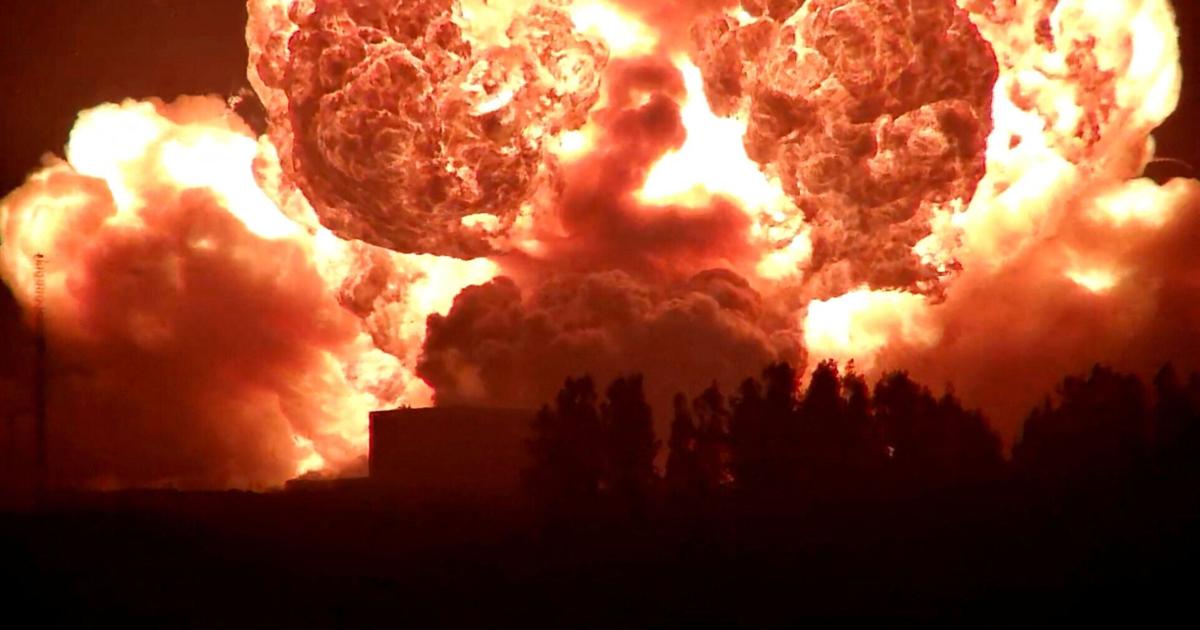
Blue Origin's New Glenn exploded during a May 28 hot-fire test, likely destroying both stages of the rocket and damaging Launch Complex 36. The setback threatens Blue Origin's ability to support NASA's Artemis plans, including launching the uncrewed Blue Moon Mark 1 lander by fall 2026 and contributing to a moon base timeline targeting 2027-2028. NASA said it will assess near-term mission impacts and provide updates as the investigation continues.
This is not just a launch failure; it is a schedule reset for the entire commercial-lunar stack. The key second-order effect is that NASA’s Artemis timeline is now more hostage to integration risk than to headline hardware ambition, because the lunar program depends on a narrow set of credible heavy-lift options and Blue Origin just proved its operational maturity is still fragile. That shifts bargaining power toward the other prime contractor in the ecosystem and raises the probability of repeated slips, redesigns, and incremental budget pressure rather than a clean substitution. For AMZN, the direct financial hit is negligible, but the strategic damage matters because Blue Origin is part of Bezos’ broader aerospace option value and his ability to compete for future government infrastructure spend. The market may underprice how a prolonged stand-down could spill into customer confidence on the launch-services side: payload planners will re-slot missions, insurance pricing will re-rate, and downstream suppliers tied to ground systems and propulsion components may face delayed cash conversion for several quarters. If the pad damage is as bad as it appears, the restart path is gated by hardware forensics, regulator sign-off, and rebuild capacity, which can easily turn a weeks problem into a multi-quarter one. The contrarian read is that the selloff impulse around AMZN should be limited because this is an optionality and reputation event, not an earnings event. The more material risk is political: if NASA’s moon schedule slips again, procurement may increasingly favor redundancy, dual-sourcing, or more mature incumbents, which compresses the addressable opportunity for Blue Origin over the next 12-24 months. The upside reversal catalyst would be a fast, transparent root-cause analysis with a credible return-to-launch date; absent that, every Artemis milestone becomes another negative read-through.
AI-powered research, real-time alerts, and portfolio analytics for institutional investors.
Overall Sentiment
strongly negative
Sentiment Score
-0.72
Ticker Sentiment
