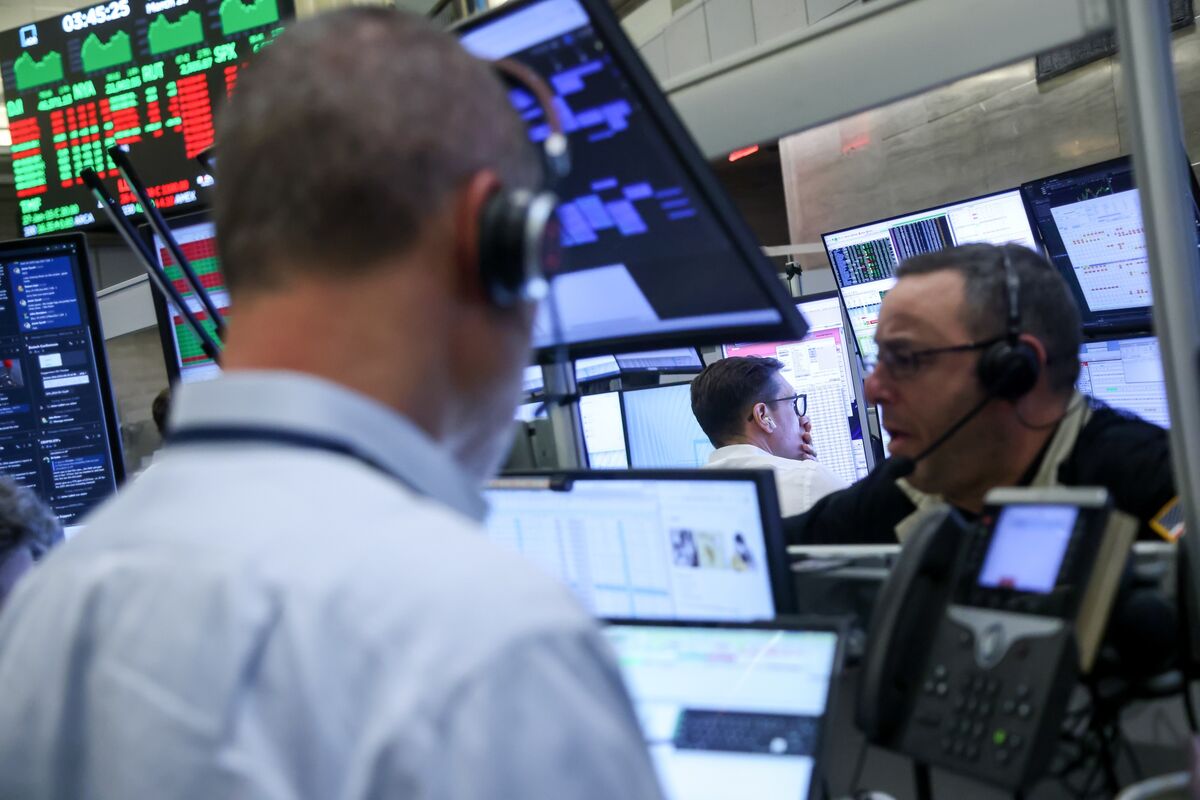
The S&P 500 is on pace for its first record close since January, rising 0.2% and moving above its prior closing high of 6,978.60 as ceasefire optimism between the US and Iran supports risk appetite. Financials and technology led gains, while the index had previously neared a technical correction zone when the Iran war lifted oil prices and inflation expectations.
The more important signal here is not the index level, but the market’s willingness to reprice geopolitical risk back to zero without waiting for perfect confirmation. That tends to favor the highest-beta parts of the market first — financials and software/AI-adjacent tech — because both are levered to improving confidence, flatter rates, and a lower volatility regime. If the ceasefire holds, the second-order winner is not energy losers alone; it is also cyclically exposed credit, M&A-sensitive banks, and firms whose multiples had been suppressed by higher discount-rate assumptions. The positioning setup matters: a record-print after a near-correction typically forces systematic and underweight managers to add exposure, which can extend the move for 1–3 weeks even if macro fundamentals barely change. The risk is that this rally becomes a pure de-risking unwind rather than a durable earnings rerating; if crude retraces too sharply or headlines deteriorate, the same crowding that fuels upside can reverse fast. In that case, the fragile part of the tape is not the index itself but the narrow leadership in banks and mega-cap tech, where consensus longs are already heavy. The contrarian read is that the market may be underpricing how quickly geopolitics can reintroduce inflation via shipping, insurance, or energy disruption premiums even without a full restart of conflict. That argues for treating the current move as a volatility compression trade more than a clean growth signal. If the ceasefire proves durable for several weeks, the more persistent beneficiary should be financials through better credit sentiment and capital-markets activity; if not, the unwind likely shows up first in the most crowded long-duration growth names and small-caps with weak balance sheets.
AI-powered research, real-time alerts, and portfolio analytics for institutional investors.
Overall Sentiment
moderately positive
Sentiment Score
0.45
