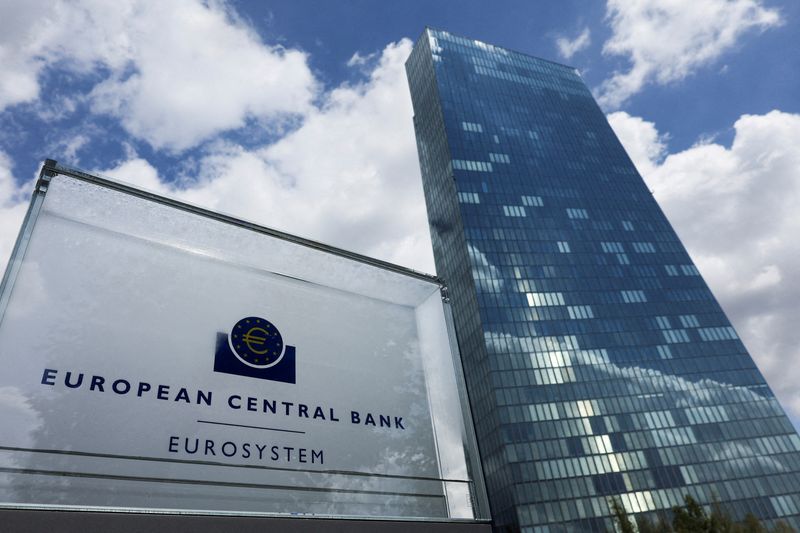
ECB policymaker Alvaro Santos Pereira said the central bank should stay focused on inflation risks and may need to act sooner rather than later to prevent second-round price effects. He emphasized acting swiftly if inflation enters a self-reinforcing spiral, while declining to pre-commit to a rate hike at the next meeting. The remarks reinforce a hawkish ECB outlook as markets await updated forecasts and new inflation data.
The immediate market read is not “ECB hike today,” but a higher probability that the terminal-rate distribution stops shifting lower. For rates, that matters more in the 2-5 year sector than at the front end: a single hawkish signal from a credible hawk can widen term premium and keep real yields sticky even if growth data soften. That is a headwind for rate-sensitive equities and for anything priced off a cheap capital regime, because the market has been assuming policy easing would cushion slowing nominal growth. The second-order effect is on sector leadership. Banks can look better near term from a steeper curve and delayed easing, but the more durable beneficiary is the euro-financing stack tied to floating-rate debt and short-duration cash generation; the losers are long-duration growth names and levered domestic cyclicals whose valuation support depends on lower discount rates. Energy-linked inflation also creates a nasty feedback loop: if policymakers stay hawkish while energy keeps pressure on headline prints, the market may reprice the path of cuts materially higher over the next 1-3 months. Contrarian angle: the consensus may be overestimating how much this moves actual policy versus rhetoric. If incoming eurozone activity data deteriorate faster than inflation broadens, the ECB can remain hawkish in language while still pausing in practice, which would cap the upside in euro yields after the initial reaction. That makes the cleaner trade less about outright duration shorts and more about relative-value positioning around sectors that are most sensitive to real-rate persistence versus those with pricing power and low leverage. For NVDA, the direct article linkage is nil, but the macro impulse still matters: a higher-for-longer Europe raises the global discount rate environment and can compress multiple expansion in mega-cap semis if U.S. rates stay firm too. That risk is medium-term rather than immediate; the next 2-6 weeks matter if ECB tone infects global bond markets, but the trade breaks if growth scare reasserts and yields retrace sharply.
AI-powered research, real-time alerts, and portfolio analytics for institutional investors.
Overall Sentiment
mildly negative
Sentiment Score
-0.15
Ticker Sentiment
