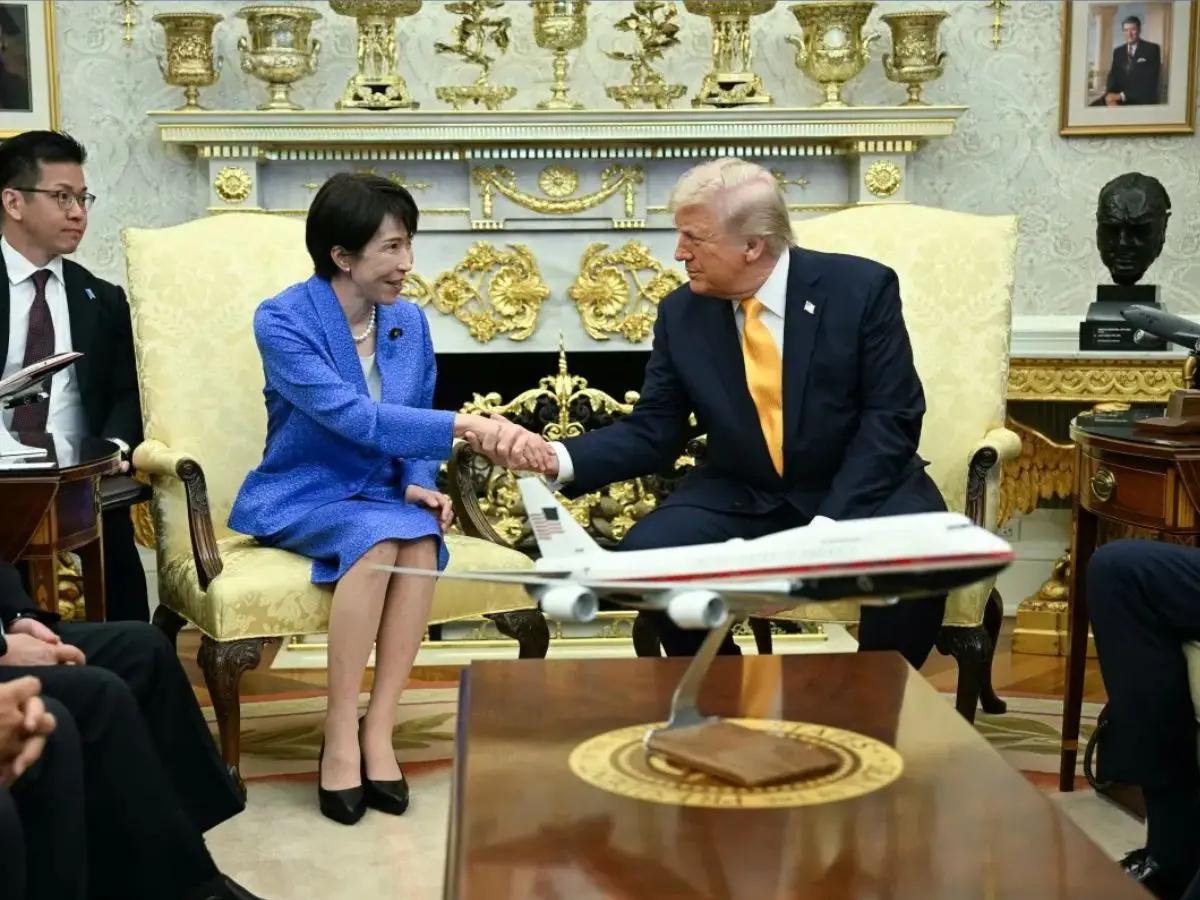
Japan is set to overhaul its arms export rules for the first time in decades, opening the door to exports of foreign-licensed defence equipment, including finished systems, to partner nations and possibly third countries. Early beneficiaries could include the Philippines, with used frigates under consideration, and Poland, as Tokyo expands defence cooperation amid higher regional security risks and US supply-chain uncertainty. The policy shift could meaningfully boost Japan’s defence industry and reshape global defence procurement, though broader market impact is more sector-specific than market-wide.
This is less about a one-off export rule change than about Japan monetizing an underused option value in its industrial base. The first-order winners are not the headline primes alone, but the broader ecosystem of electronics, propulsion, sensors, and maintenance services that can turn one-off platform sales into recurring aftermarket revenue; that shift is typically where margin expansion shows up. The second-order competitive effect is on South Korea and selected European suppliers: Japan can now compete on trusted-supplier status plus higher-end subsystems, which matters most in contested theaters where buyers care about interoperability and delivery certainty more than sticker price. The biggest near-term catalyst is not volume, it is validation. If Tokyo clears even a few visible deals over the next 3-9 months, that lowers perceived policy risk and should unlock a pipeline of licensed-production, upgrade, and electronic warfare contracts that are materially higher quality than legacy domestic procurement. The risk is execution and diplomacy: any high-profile backlash over end-use controls, transfer-to-third-country provisions, or constitutional interpretation could slow approvals and keep the opportunity trapped in headlines for another 6-12 months. The contrarian point is that markets may underappreciate how little this needs to be “massive” to matter. Japan does not have to become a top-three exporter for the equity story to work; even a modest export share can re-rate domestic defense contractors if investors start modeling foreign sales as a persistent growth layer rather than a political exception. Conversely, the move is probably overdiscussed as a pure equipment-export story and underdiscussed as a supply-chain realignment story: trusted Japanese components embedded in allied platforms could be the more durable profit pool than finished-system exports.
AI-powered research, real-time alerts, and portfolio analytics for institutional investors.
Request a DemoOverall Sentiment
mildly positive
Sentiment Score
0.20
