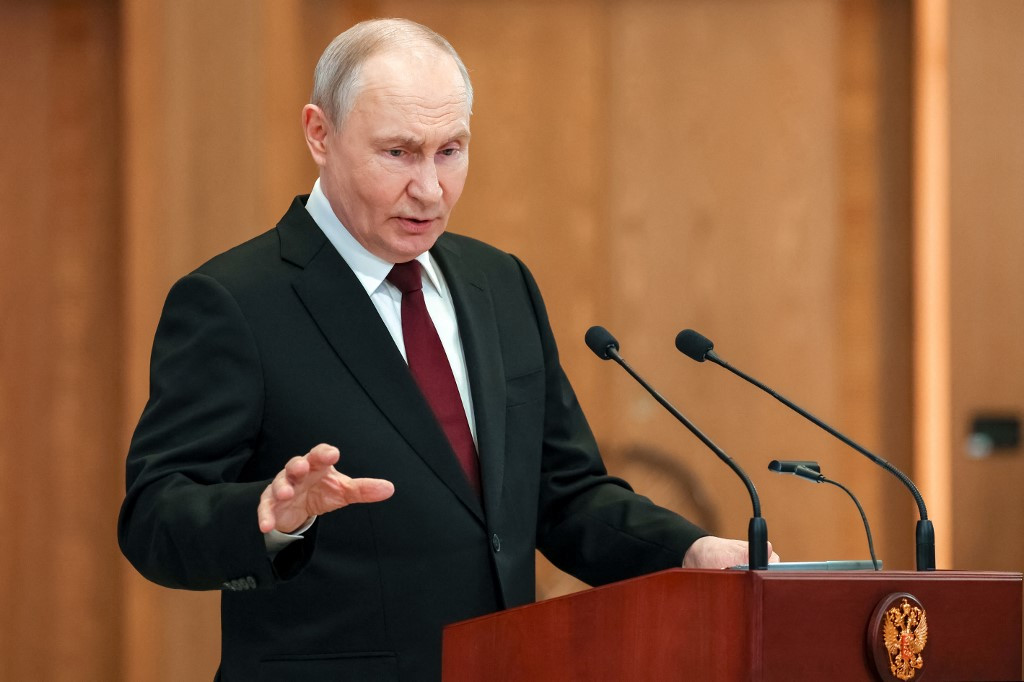
Putin said Russia's troops are advancing 'in all directions' and claimed the war in Ukraine is nearing its end, but he also cautioned that timing a conclusion is not feasible while fighting continues. The article frames the remarks as geopolitical messaging amid limited gains from his Central Asia visit and escalating pressure on Armenia ahead of its June 7 elections. The piece is more relevant to geopolitical risk than to direct market catalysts, though it may modestly affect regional sentiment.
The market implication is less about battlefield optics than about the Kremlin's signaling problem: when a regime starts declaring strategic momentum while simultaneously widening coercion around its periphery, it is usually trying to mask constraints in labor, logistics, and diplomacy. That combination tends to raise the probability of more fragmented escalation rather than clean de-escalation, because leadership incentives shift toward visible wins in adjacent theaters where costs are lower than on the front line. The second-order effect for emerging Europe is a premium on transit and energy optionality. Any renewed pressure on Armenia, Kazakhstan, or corridor-linked trade routes increases the value of non-Russian routing, which should support Turkey-linked logistics, Black Sea alternatives, and select Central Asia infrastructure spend over a 6-18 month horizon. It also keeps defense procurement elevated in NATO frontier states even if headline war intensity stabilizes, because markets will price a longer tail of coercive behavior and supply-chain disruption. The contrarian read is that public claims of nearing an end may actually be a hedge against domestic fatigue, not a signal of imminent peace. If the Kremlin needs to project closure, it suggests the policy window for a meaningful settlement is still narrow and fragile; any disappointment in summer diplomacy or regional leverage could trigger renewed escalation rhetoric within weeks. In that scenario, the key trade is not to bet on an end to hostilities, but on the persistence of higher baseline geopolitical risk across Eastern Europe and the South Caucasus.
AI-powered research, real-time alerts, and portfolio analytics for institutional investors.
Request a DemoOverall Sentiment
mildly negative
Sentiment Score
-0.25
