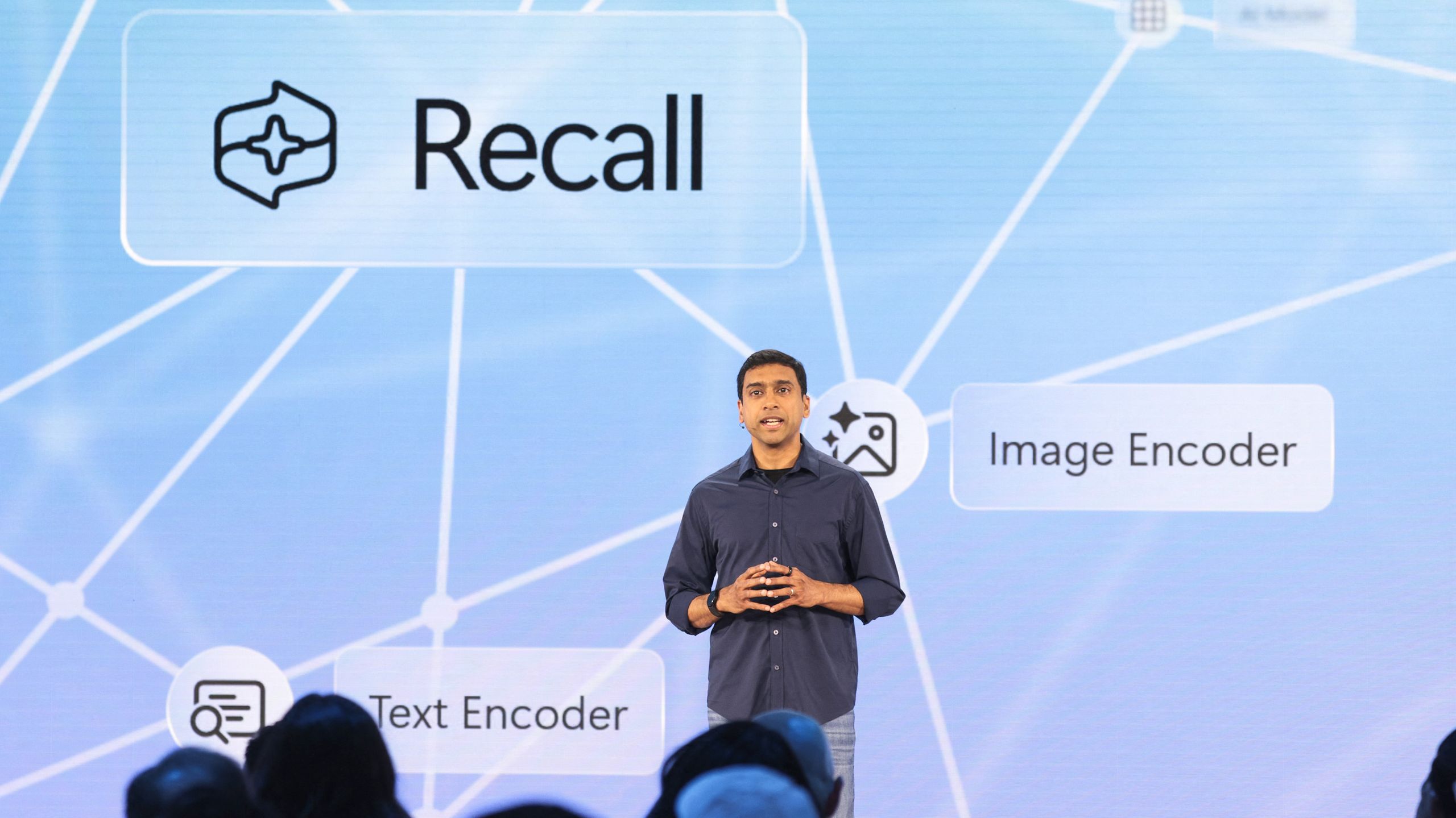
Microsoft’s redesigned Windows Recall is facing renewed security criticism after researcher Alexander Hagenah said his TotalRecall Reloaded tool can extract data from the Recall vault by riding along with a Windows Hello authentication session. Microsoft says the behavior does not represent a security boundary bypass, citing timeout and anti-hammering controls, but the article highlights lingering concerns that decrypted Recall content is exposed to an unprotected process. The news is negative for Recall’s security perception, though the likely market impact is limited.
This is less a product-risk headline than a credibility drag on Microsoft’s AI-PC strategy. The market already prices Recall as a privacy landmine; repeated “non-bug” determinations increase the odds that enterprise buyers treat it as opt-in-only at best, or disablement-by-policy at scale, which reduces the attach-rate of Copilot+ hardware features and weakens the Windows refresh halo over the next 2-4 quarters. The second-order effect is on the broader AI endpoint narrative: if the flagship local-AI feature can be framed as structurally exposed, it raises the bar for any vendor promising “secure on-device AI” without a genuinely isolated rendering path. That likely benefits security-first endpoint vendors and browser/identity stacks that can monetize data-loss prevention, because the pain point is not malware sophistication so much as governance and auditability. Expect procurement teams to push spending from experimental AI features into controls, logging, and endpoint hardening budgets. For MSFT, direct financial damage is likely limited in the next 1-3 months, but the reputational overhang can matter if it slows enterprise piloting of Copilot+ PCs into budget season. The real risk is not a one-off disclosure; it is cumulative policy friction that makes Recall a feature CIOs must explain to legal and compliance, which is the sort of friction that quietly suppresses seat expansion and device upgrade velocity. A reversal would require Microsoft to materially re-architect the data flow, not just add more prompts. The contrarian view is that the market may be overestimating near-term revenue impact: consumer usage of Recall is likely tiny, and Microsoft’s statement implies this remains within the intended design envelope. But that is precisely why the stock reaction may stay muted while the long-run option value of the AI-PC thesis erodes—this is a “slow leak,” not a headline shock.
AI-powered research, real-time alerts, and portfolio analytics for institutional investors.
Overall Sentiment
moderately negative
Sentiment Score
-0.35
Ticker Sentiment
