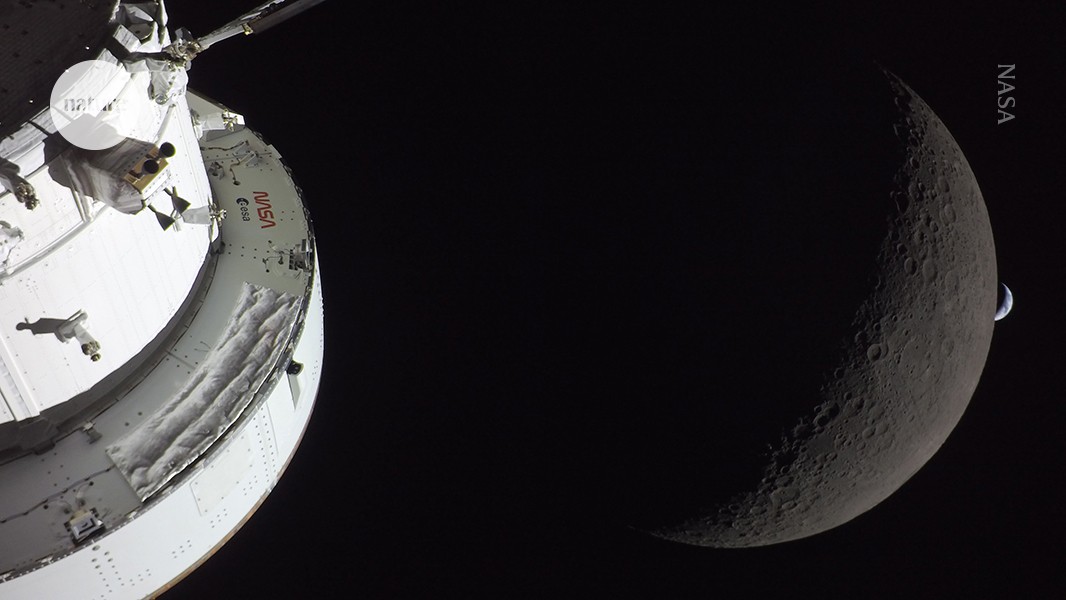
NASA’s Artemis II mission is framed as a successful but expensive multinational Moon fly-by, with launch costs cited at at least US$4 billion and NASA’s 2027 budget proposed to fall to US$18.8 billion from US$24.4 billion in 2026. The article argues the mission may inspire future scientists and strengthen global collaboration, but warns against diverting funds from science programs and against a new space race. Market impact is limited, though the budget pressure and continued emphasis on space infrastructure and international cooperation are notable.
The real market implication is not the Moon mission itself, but the policy signal it sends: human spaceflight is being framed as a strategic, not purely scientific, budget priority. That raises the probability of a multi-year reallocation inside federal aerospace spend toward launch, crew systems, navigation, comms, and deep-space infrastructure, even if the top-line NASA budget is under pressure. The second-order winner set is broader than the prime contractors; expect incremental demand for industrials, avionics, thermal systems, radiation-hard semis, and optical comms suppliers that sit one or two tiers down the chain. The near-term loser is anything dependent on protected science funding, especially earth-observation, climate monitoring, and large observatories. If appropriations drift toward manned programs while the overall budget is capped, the first cuts typically hit long-cycle scientific payloads and university-linked grants rather than marquee exploration hardware. That creates a lagged negative for select space-science services and a positive for defense-adjacent names that can reprice as “dual-use infrastructure” rather than pure exploration. The contrarian read is that the market may be overestimating the permanence of this spending tilt. Human spaceflight has strong symbolism, but the budgetary base is still fragile and vulnerable to a change in administration, a launch anomaly, or a sharper domestic fiscal fight over deficits. The main catalyst window is 3-12 months: appropriations decisions, partner-country commitments, and contractor guidance updates will matter more than the mission footage itself. From an ESG standpoint, the article is a reminder that climate-related monitoring and environmental stewardship can become collateral damage when prestige programs crowd the ledger. That creates a policy paradox: the same public enthusiasm that helps validate Artemis could reduce funding for the instruments needed to measure Earth-system risk. If that trade-off persists, the market should treat earth-science policy risk as asymmetric to the downside over the next 1-2 budget cycles.
AI-powered research, real-time alerts, and portfolio analytics for institutional investors.
Request a DemoOverall Sentiment
neutral
Sentiment Score
0.10
