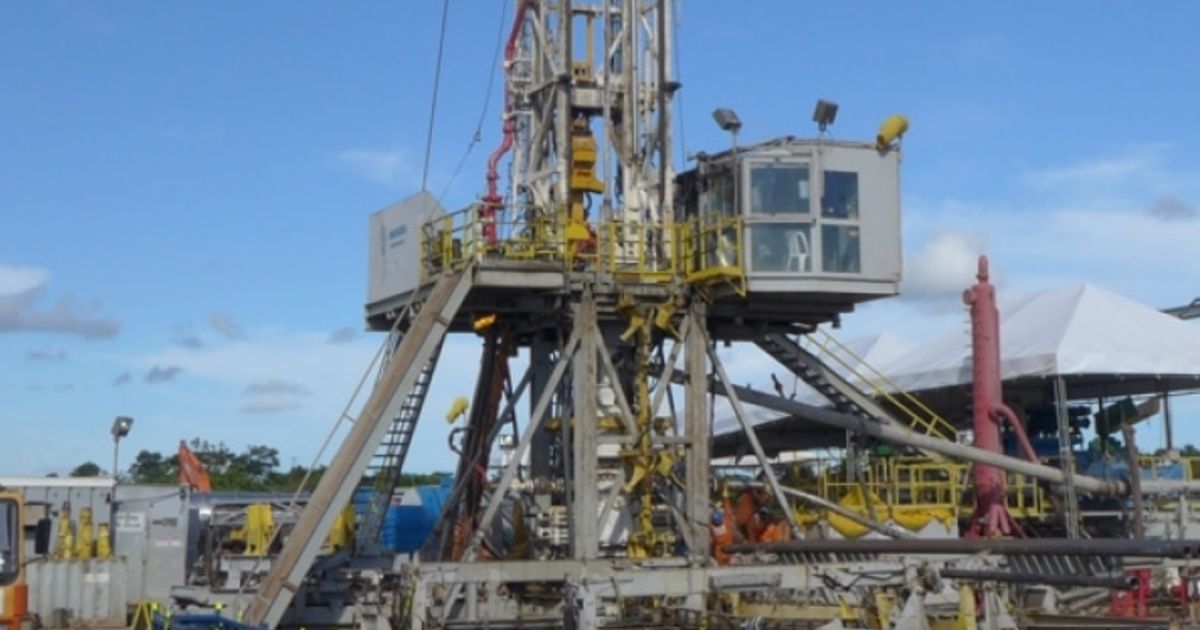
Alvopetro reported a breakout 2025 with average production rising 41% year-over-year to over 2,500 boe/d, a Q4 exit near 2,900 boe/d and a January 2026 monthly record of 3,100 boe/d. Year-end reserves jumped materially — 1P up 79% to >8 million boe (485% replacement) and 2P up 43% to >13 million boe (530% replacement) — driving 1P NPV +38% and 2P NPV +20% to nearly $400 million; 2025 production was ~1 million boe. The company is scaling Murucututu facilities and pipeline capacity in Brazil, advancing an eight‑well Canadian growth platform (four net) and follows a capital-allocation policy that directs roughly half of cash flow to growth and half to returns, including a 20% Q4 dividend increase and up to US$0.12 per share special dividend (yield >8%).
Market structure: Alvopetro (TSX-V:ALV / OTC:ALVOF / FRA:A6Y0) is a clear short‑cycle winner: 41% production growth and +79% 1P reserves materially improve cash flow sensitivity to current oil prices and raise junior‑E&P competitive pressure in onshore Brazil and Canadian tight plays. Winners: ALV equity holders, local midstream vendors (pipeline contractors) and service firms; Losers: higher‑cost regional producers and storage-constrained traders if takeaway capacity expands and local differentials tighten. Cross-asset: stronger output can modestly weigh on Brent/WTI regional spreads, tighten nearby hedges, slightly widen credit spreads for capital‑intensive juniors if capex overruns occur, and support BRL versus CAD/USD on positive Brazilian energy flows. Risk assessment: Tail risks include Brazilian regulatory changes (export levies, local content rules) and operational setbacks (183‑D4 style well underperformance or pipeline delays) that could reverse the 485–530% replacement ratios; low‑probability political/legal actions could wipe >50% equity value. Time horizons: immediate (days) — watch monthly production prints (Jan = 3,100 boe/d); short (3–6 months) — facility/pipeline completion and Q2 drilling results; long (12–24 months) — reserve monetization and FCF conversion. Hidden dependencies: offtake contracts, pipeline capacity milestones and capex funding; catalysts: upcoming Q1 ops update, reserve reclassifications, dividend declarations. Trade implications: Direct: establish a tactical 2–3% long in ALV (TSX‑V:ALV / OTC:ALVOF) sized to catalyst risk; target +100% in 12 months if market EV <50% of stated 2P NPV (~US$400M) and stop‑loss 30% on missed milestones. Options: where liquid, buy 9–12 month call spreads (delta ~0.40) or buy stock and sell 3‑6 month covered calls to monetize the >8% yield; avoid levering until pipeline completion. Pair: long ALV vs short XOP (SPDR Oil & Gas E&P ETF) to capture junior rerating; rotate proceeds into Brazil midstream contractors on confirmed takeaway completion. Contrarian angles: Consensus may conflate reserve additions with realized cash value — reserve NPV (~US$400M 2P) requires capex and markets; dividend sustainability is contingent on FCF after accelerated drilling and pipeline spend. Historical parallels (junior E&P post‑reserve rerate) show >30–50% pullbacks when capex/timing slip; therefore size positions modestly and require capex completion within 6–12 months or a debt/FCF ratio threshold (net debt/EBITDA <1.5x) before adding more. Unintended consequence: aggressive payout policy could crowd out growth if commodity prices fall >20% YTD, so prioritize liquidity and milestone‑based scaling.
AI-powered research, real-time alerts, and portfolio analytics for institutional investors.
Request a DemoOverall Sentiment
moderately positive
Sentiment Score
0.60
