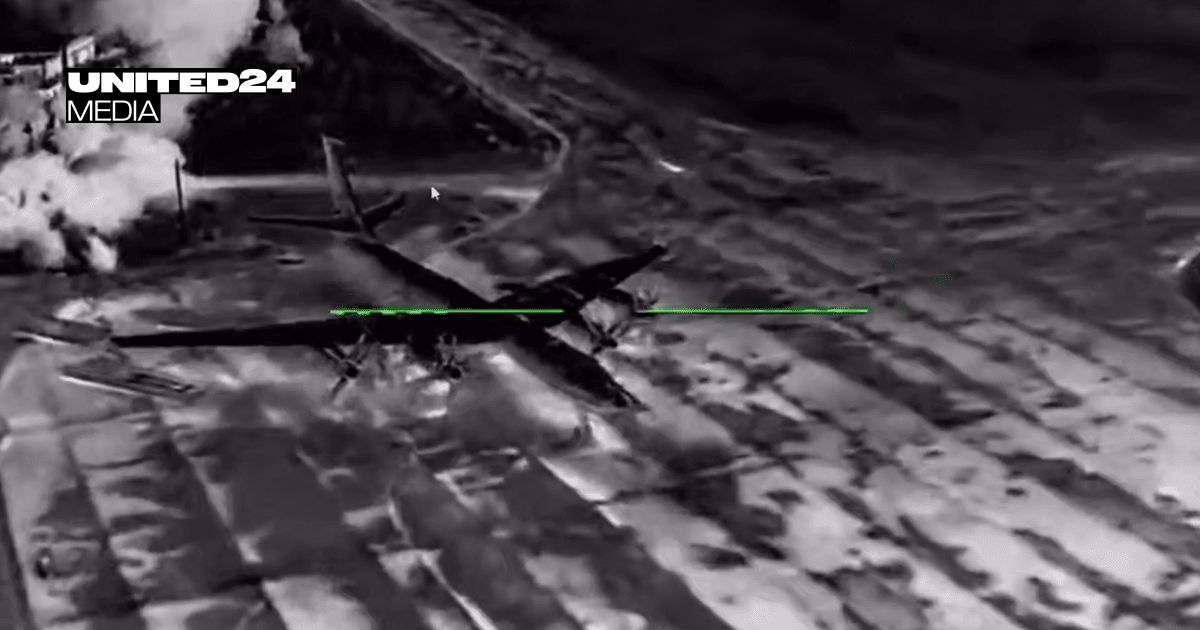
Ukraine’s Unmanned Systems Forces said it destroyed 2 Russian Tu-142 maritime patrol aircraft and struck an Iskander missile system near Taganrog in Russia’s Rostov region overnight on May 30. If confirmed, the loss of two Tu-142s would be a significant blow to Russia’s naval aviation and long-range surveillance capability. The attack also reportedly triggered fires at the Port of Taganrog and an oil facility in Krasnodar, underscoring the continued escalation of Ukraine’s long-range drone campaign.
This is less about the individual platform loss and more about the erosion of Russia’s ability to preserve scarce, high-value enablers deep in the rear. Maritime patrol and ASW aircraft are not easily replenished, so even a small number of confirmed kills matters disproportionately because it forces Russia to husband remaining assets, reduce sortie frequency, and accept lower-quality maritime/domain awareness over time. The bigger second-order effect is on operational confidence: if long-range drones can reliably reach airfields and launch positions around Taganrog, Russia must spend more on dispersion, air defense, decoys, and base hardening, all of which are fixed-cost burdens that scale poorly. The more important tactical takeaway is the pressure this creates on Russian strike cadence and missile survivability. Hitting an Iskander system near a launch position suggests Ukraine is increasingly targeting the “last mile” of offensive fires, which can create intermittent but meaningful disruptions in launch tempo even without destroying large numbers of systems. Over the next few weeks, expect Russia to respond with tighter air-defense layering and more mobile launch practices, but that usually comes with slower kill chains and reduced volume, not a clean restoration of capability. The market implication is mostly through the defense complex rather than direct single-name exposure: this reinforces the structural bid for counter-UAS, base defense, sensors, EW, and short-range air defense. The contrarian point is that headline damage can be overstated if the aircraft were non-operational or under repair; in that case, the marginal impact is more about propaganda and Russian force dispersion than true platform attrition. Still, the sustained tempo of deep strikes argues that NATO suppliers with low-cost intercept, drone defense, and battlefield ISR should keep taking share from legacy platforms and heavy munitions over a 6-18 month horizon.
AI-powered research, real-time alerts, and portfolio analytics for institutional investors.
Request a DemoOverall Sentiment
mildly negative
Sentiment Score
-0.20
