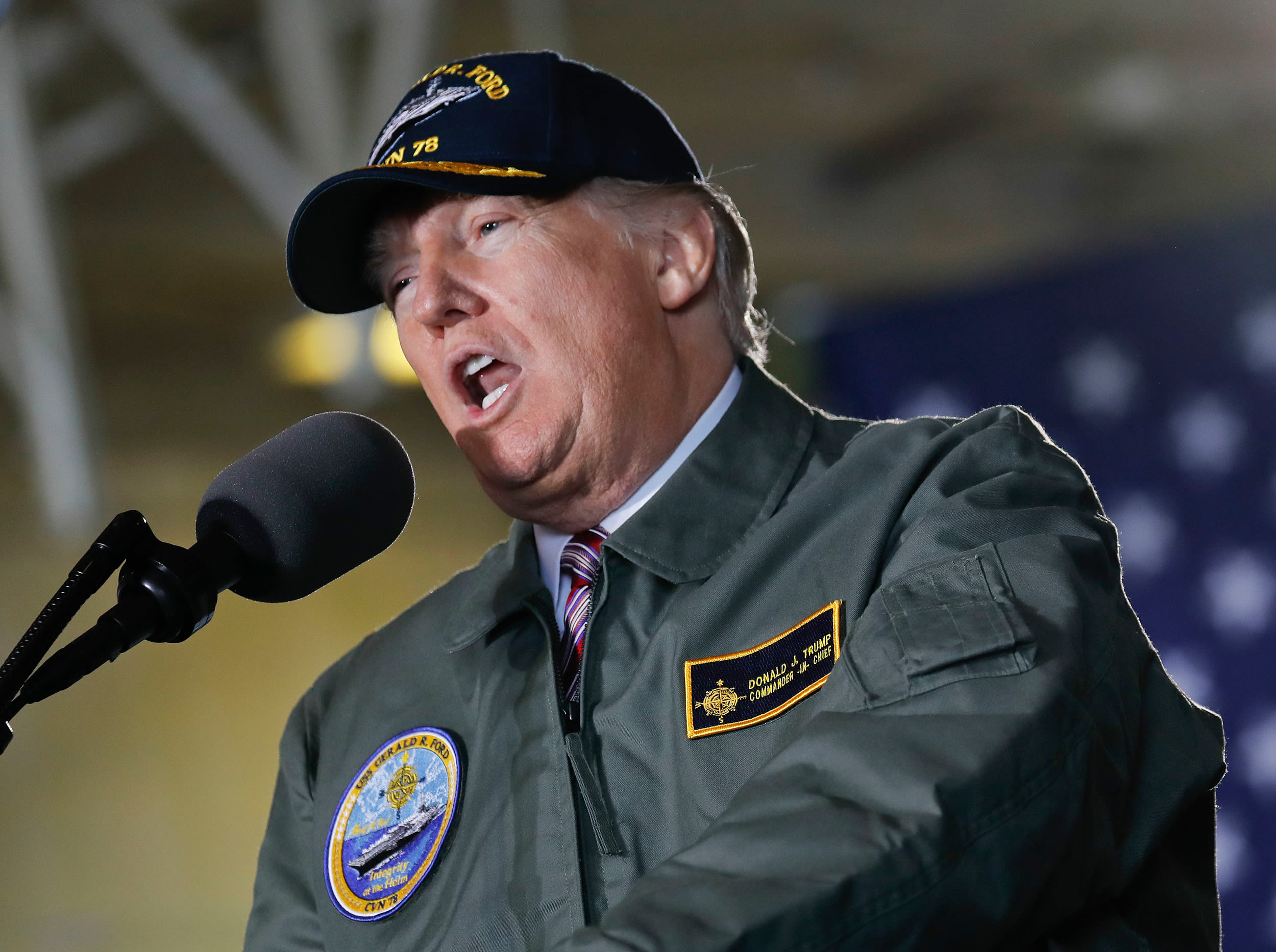
The U.S. has massed two carrier groups plus hundreds of bombers and fighters in the Middle East—the largest U.S. military presence there since 2003—and launched coordinated strikes on Iran with Israel, raising acute geopolitical risk. The article criticizes President Trump for not publicly or legislatively making the case for war, highlights conflicting claims about Iran’s nuclear capabilities (including a DIA 2025 assessment that ICBM-capable delivery may be a decade away), and warns that unclear objectives and potential for wider escalation create a pronounced risk premium for markets and assets sensitive to Middle East conflict.
Market structure: Defense primes (LMT, NOC, RTX, GD) and energy producers (XOM, CVX, XLE) are the immediate beneficiaries as government demand and crude risk premium jump; expect 10–20% near-term upside in defense stocks and 5–15% in oil-related equities if strikes/retaliation persist for weeks. Commercial travel, tourism, and regional EM assets (TRY, ILS, selected GCC banks) are direct losers — revenue and FX pressure can compress earnings by mid-teens percentage points over 1–3 months. Cybersecurity and ISR suppliers should see durable orderbook growth, shifting pricing power to incumbent primes and specialized small caps with vetted government contractors. Risk assessment: Baseline (30–60 days) scenario: localized strikes and reprisal cycles produce oil +10% and S&P drawdown 5–12%; tail risk (~5%) — wider regional war or shipping chokepoint closure could push Brent +40–60% and S&P -20%. Hidden dependency: Fed reaction — a sustained oil shock (> +20% for 3 months) forces tighter policy, steepening real yields and pressuring multiples for growth stocks. Key catalysts that will accelerate outcomes: Iranian asymmetric retaliation, shipping disruptions in Hormuz, visible Congressional funding or explicit US troop commitments; de-escalation signals (prisoner swaps, backchannel diplomacy) would reverse risk premia quickly. Trade implications: Tactical (48–72h action) — overweight defense via ITA and selective 1–2% single-name additions to LMT/NOC, add 2% XLE for oil upside, and 1–2% GLD for tail inflation. Use options to cap cost: buy 90-day call spreads on ITA sized to 1–2% NAV and 90-day VIX call spreads (0.5% NAV) as crash insurance; initiate 3-month put spreads on AAL/UAL (0.5–1% NAV) as relative short plays versus long travel ETF exposures. Timeframes: hold defense/energy 1–6 months, unwind volatility hedges if VIX <18 for five trading days or oil retraces >15% from peak. Contrarian angles: Consensus may overshoot sustained premium pricing — historical parallels (1990–91 Gulf War) show oil can spike 30–40% then mean-revert within 6–9 months; if escalation remains tactical and short-lived (probability ~40%), defense winners will be earlier and smaller than priced. Watch balance sheets — avoid small-cap energy names without hedge coverage; unintended consequence of prolonged risk-off is dollar strength and higher real yields, which can create buying opportunities in cyclical industrials and select EM credit after initial sell-off.
AI-powered research, real-time alerts, and portfolio analytics for institutional investors.
Request a DemoOverall Sentiment
moderately negative
Sentiment Score
-0.55
