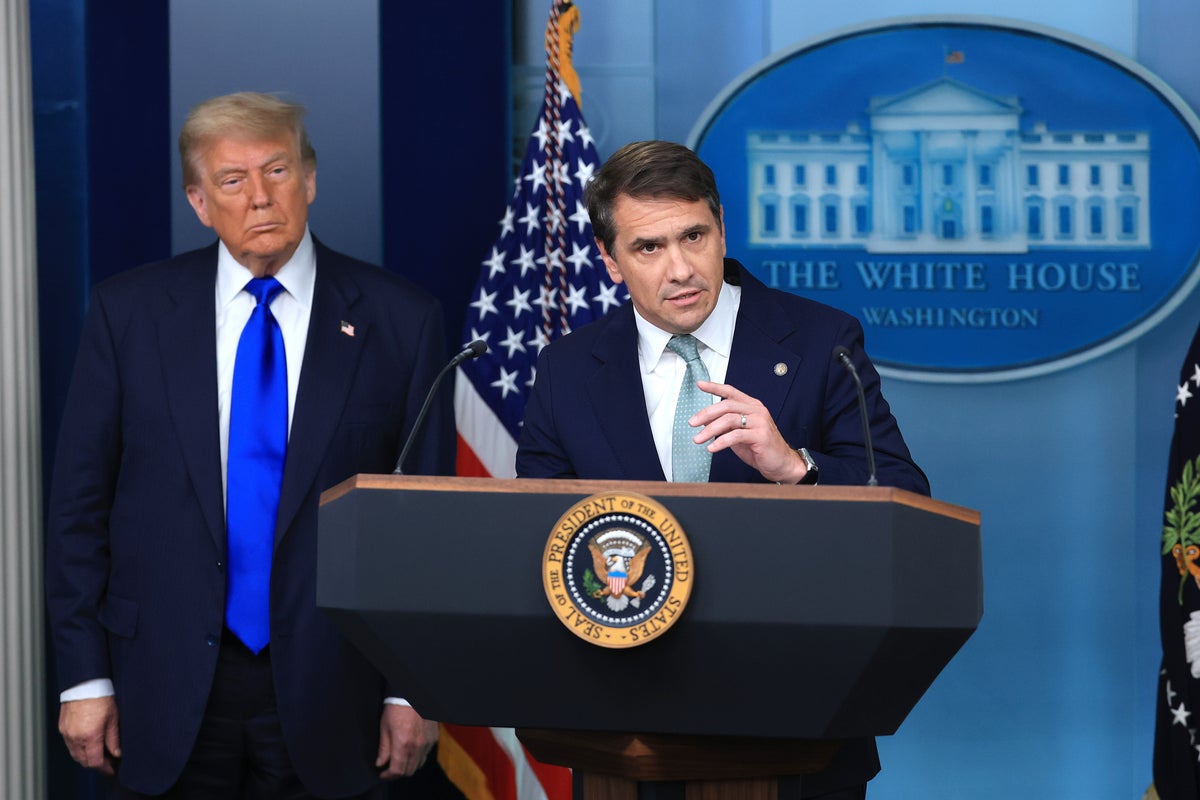
Republican senators are privately urging Trump to scrap the $1.776 billion "Anti-Weaponization Fund," a Justice Department program that could pay allies, including January 6 rioters, amid growing political and legal backlash. The fund has already triggered public outrage, delayed Senate action on immigration-enforcement funding, and is now under a federal judge’s review. While primarily a political story, it raises reputational and governance risks for the administration and Republicans heading into midterm elections.
This is less about the nominal size of the fund than the signal it sends to Republican vote share and legislative bandwidth. The immediate loser is any part of the administration agenda that depends on a disciplined Senate coalition: even if the money is never deployed, the episode consumes scarce political capital and increases the odds of concessions on unrelated spending fights. In markets, that typically translates into a short-lived but real risk premium in policy-sensitive sectors tied to federal funding certainty, especially contractors and security-adjacent names that trade on appropriations cadence rather than fundamentals. The second-order effect is that legal/process risk now matters more than headline politics. A court pause plus internal GOP resistance raises the probability that this becomes a months-long funding negotiation rather than a clean policy win, which tends to depress visibility for any beneficiaries of enforcement-heavy budgets. The more important signal is that Republican leadership is willing to trade away a controversial item to unblock higher-priority legislation, implying this fund is a bargaining chip, not an end-state. Contrarian read: the outrage may be creating a false binary. If the fund is pared back, delayed, or redirected, the administration can still claim a partial victory while avoiding the full reputational cost, which would blunt the downside for Republicans more than many expect. That means the political trade is likely a fade rather than a structural short unless courts extend the freeze or the story becomes a broader proxy for fiscal mismanagement into the next budget fight. The window for market impact is days to a few weeks, not quarters, unless it metastasizes into a larger governance narrative.
AI-powered research, real-time alerts, and portfolio analytics for institutional investors.
Overall Sentiment
strongly negative
Sentiment Score
-0.55
