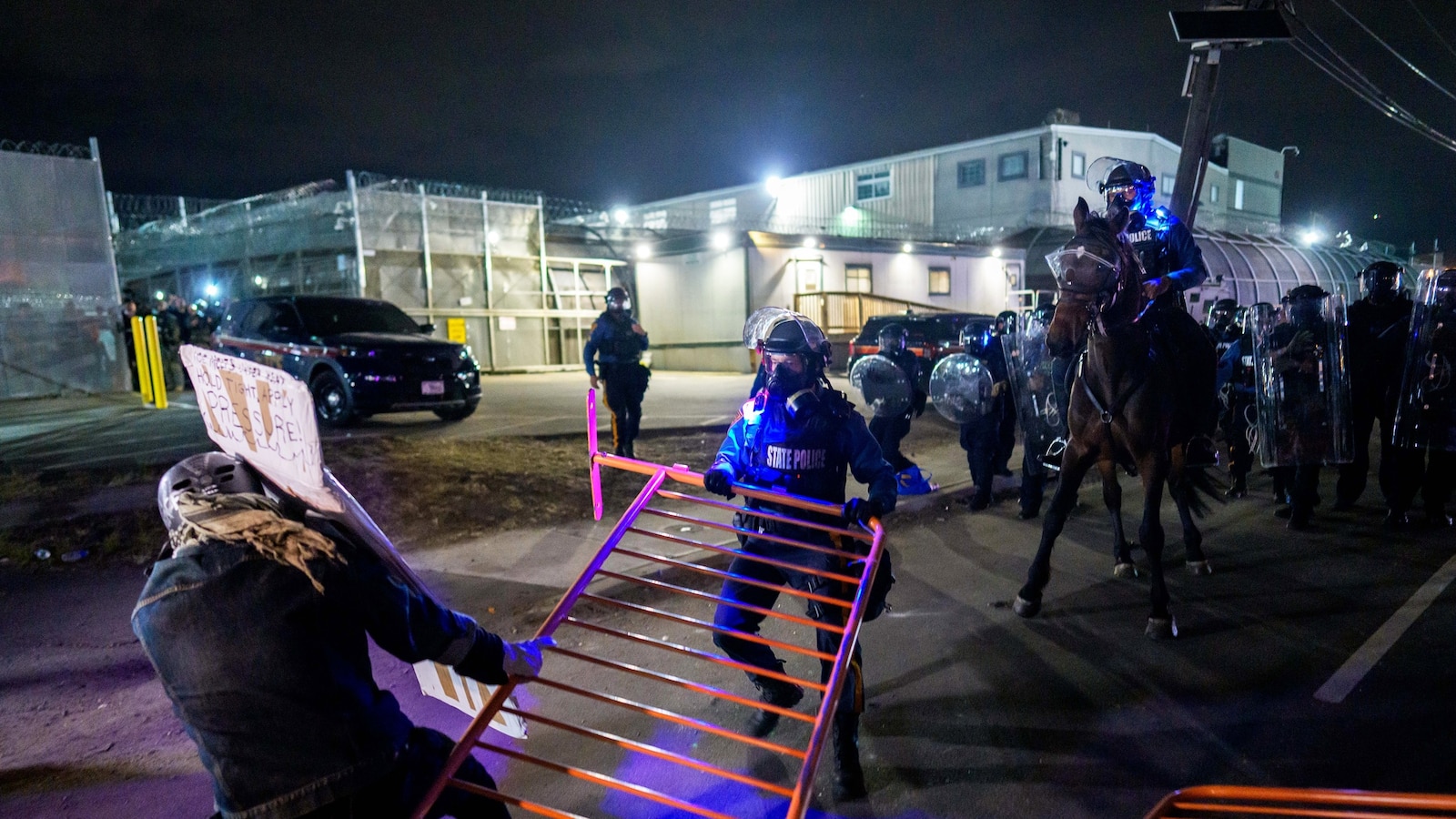
Newark ordered a mandatory nightly curfew around the Delaney Hall ICE detention facility after repeated clashes between protesters and state police led to tear gas, horses, and multiple arrests. Officials said six people were arrested Friday night, with at least eight arrests tied to the protests overall, while allegations of poor detainee conditions remain disputed by DHS. The story is politically charged and operationally disruptive, but it has limited direct market impact.
The market read-through is not the street-level protest itself; it is the probability that a localized civil-order issue turns into a multi-week operating constraint for a federal contractor and a political flashpoint that drags in state resources. For ICE, the near-term risk is not revenue loss from one facility, but margin pressure from escalation: perimeter security, overtime, legal exposure, and the chance that detainee transfers or temporary stand-downs reduce throughput. In a contract-heavy model, even modest disruption can matter because the facility-level optics can accelerate oversight, injunction requests, and procurement delays elsewhere. The second-order winner is anyone supplying crowd control, perimeter security, surveillance, or detention-adjacent infrastructure; the loser set is broader than ICE and includes private operators with similar contracts if this becomes a template for state-level interference. If the story persists beyond days into weeks, the bigger catalyst is political: it gives federal agencies cover to harden operations, while also giving opponents a durable litigation record that can slow permitting, staffing, and renewals. That asymmetry usually favors volatility over directional conviction—headline risk can re-rate the name lower even if the underlying contract book is intact. The contrarian point: the consensus may be overestimating the medium-term operational damage to ICE and underestimating the speed with which the issue can be de-escalated once political actors decide they have made their point. If state police effectively absorb the perimeter function, the federal agency may actually benefit from reduced immediate confrontation while keeping the facility running. That makes this more of a sentiment shock than a fundamental thesis change unless arrests, injuries, or federal injunctions broaden materially over the next 1-3 weeks.
AI-powered research, real-time alerts, and portfolio analytics for institutional investors.
Overall Sentiment
mildly negative
Sentiment Score
-0.20
Ticker Sentiment
