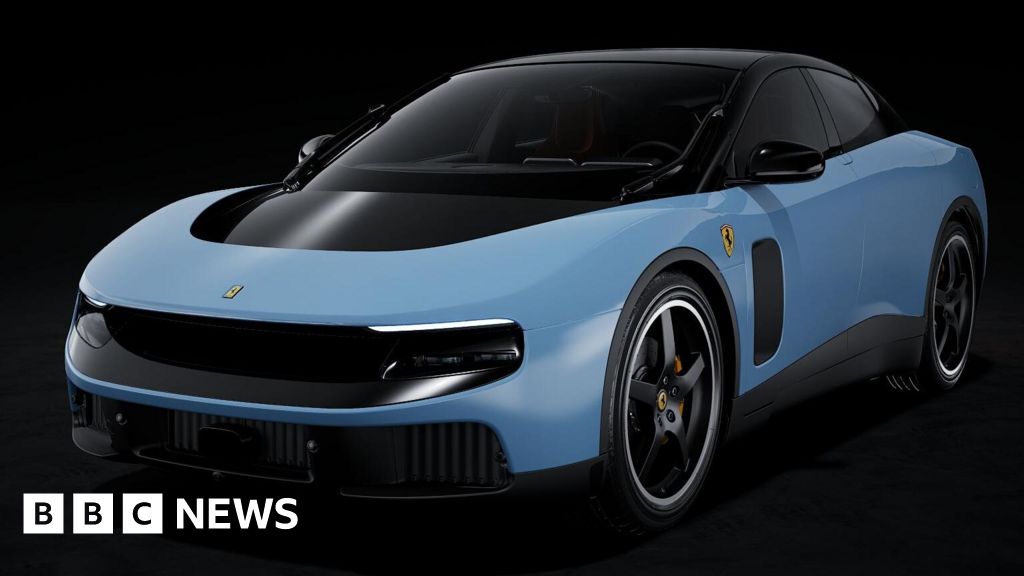
Ferrari’s first EV, the Luce, triggered backlash over its design and $640,000 price tag, and Ferrari shares fell 8% the day after the unveiling. Critics argue the car departs from Ferrari’s identity, while management says demand is strong and the model represents an innovation-led move into EVs. The article frames the launch against intensifying competition from Chinese EV makers and broader pressure on luxury automakers to balance electrification with brand loyalty.
The immediate market reaction is less about the car itself and more about signaling risk: Ferrari is testing how far it can stretch its brand premium before the badge starts to dilute. That matters because the equity has long embedded an unusually high multiple on the assumption that scarcity, heritage, and emotional pricing power remain intact; a successful EV launch should diversify demand, but a poorly received one can compress that scarcity premium faster than unit economics change. The first-order loser is RACE, but the deeper risk is to the whole luxury-performance cohort if this becomes the template for "innovation-led" brand resets. If Ferrari is forced to defend design decisions publicly, it increases the probability of either slower EV adoption or product compromises later, both of which are suboptimal for margin and narrative. Conversely, Chinese premium EV makers benefit from any Western self-inflicted confusion: the comparison set shifts from "best-in-class luxury" to "too expensive and not clearly better," which is exactly where domestic Chinese brands are strongest. TSLA is only a marginal beneficiary here, but the second-order effect is real: the more legacy marques stumble in translating heritage into EVs, the more Tesla can sell simplicity and software-led identity versus design-led theater. F is exposed only indirectly through the broader market implication that legacy OEMs are still paying the transition tax; if Ferrari's pain is interpreted as evidence that high-end EV demand is more elastic than expected, it can weigh on the whole EV basket over the next 1-3 months. The contrarian view is that the backlash may be a feature, not a bug. Ferrari may be engineering a deliberate controversy to reset awareness with younger buyers, and the first meaningful read-through will not be launch-week sentiment but order conversion and deposit retention over the next 2-3 quarters. If the company proves it can sell a controversial EV at full price without damaging Purosangue-like demand resilience, the stock could recover the drawdown quickly; if not, the multiple deserves to de-rate because brand elasticity has been exposed.
AI-powered research, real-time alerts, and portfolio analytics for institutional investors.
Request a DemoOverall Sentiment
mildly negative
Sentiment Score
-0.25
Ticker Sentiment
