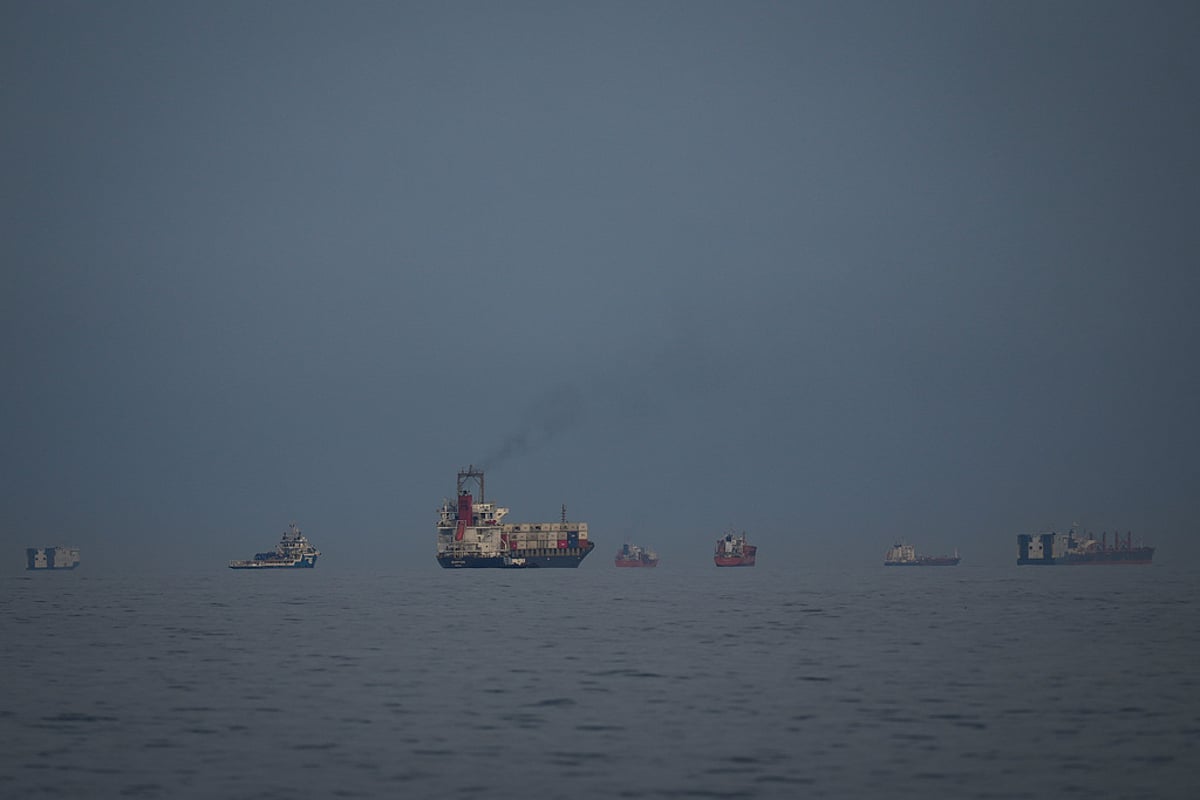
Iran-linked ships are increasingly using 'ghost' tactics — going dark, spoofing identities and masking routes — as the US tightens its blockade in the Strait of Hormuz. At least six merchant vessels have already turned back, while more than a dozen US warships remain deployed east of the strait. The escalating deception raises the risk of disruption in a corridor that carries a significant share of global oil and gas flows.
The market is underestimating how quickly this shifts the contest from physical interdiction to intelligence warfare. Once commercial routing systems become unreliable, the first-order beneficiary is not just the enforcer but every layer of maritime verification: satellite imagery providers, AIS analytics vendors, insurers, and bunker/freight desks that can monetize dislocations faster than ships can adapt. The second-order loser is any operator with opaque ownership or spot exposure to the Gulf, because a higher probability of “mis-ID” translates into longer vetting times, more conservative routing, and a measurable widening of war-risk premia even without a single successful breach. The key near-term catalyst is not a supply outage but an escalation in false positives and operational friction. Over the next days to weeks, expect port delays, discretionary loading cancellations, and a jump in freight volatility as counterparties demand more documentation and larger buffers; over months, repeated spoofing can normalize higher insurance rates and raise the cost of capital for middlemen moving sanctioned barrels. If enforcement proves effective, the trade becomes a squeeze on illicit flows rather than a physical shortage — which is bearish for marginal Iranian-linked crude economics but bullish for compliant producers and for U.S. Gulf export infrastructure that can absorb displaced demand. The contrarian point is that the headline risk may be bigger than the actual volumetric risk. The Strait’s geography makes full-scale leakage hard, so the more likely outcome is a containment regime that preserves barrels but taxes logistics; that means energy price spikes may fade faster than freight/insurance repricing. The more durable alpha is in the plumbing: whoever can verify, insure, finance, or reroute cargoes in real time should gain share as trust in transponder data degrades. A further tail risk is policy broadening: if spoofing spreads, regulators may force stricter KYC on vessel ownership and counterparties, which would impair sanctioned-oil arbitrage for quarters, not days. That creates a high convexity setup where the loser is the gray-market ecosystem, while compliant infrastructure and data providers compound recurring revenue as the market pays up for certainty.
AI-powered research, real-time alerts, and portfolio analytics for institutional investors.
Request a DemoOverall Sentiment
moderately negative
Sentiment Score
-0.35
Ticker Sentiment
