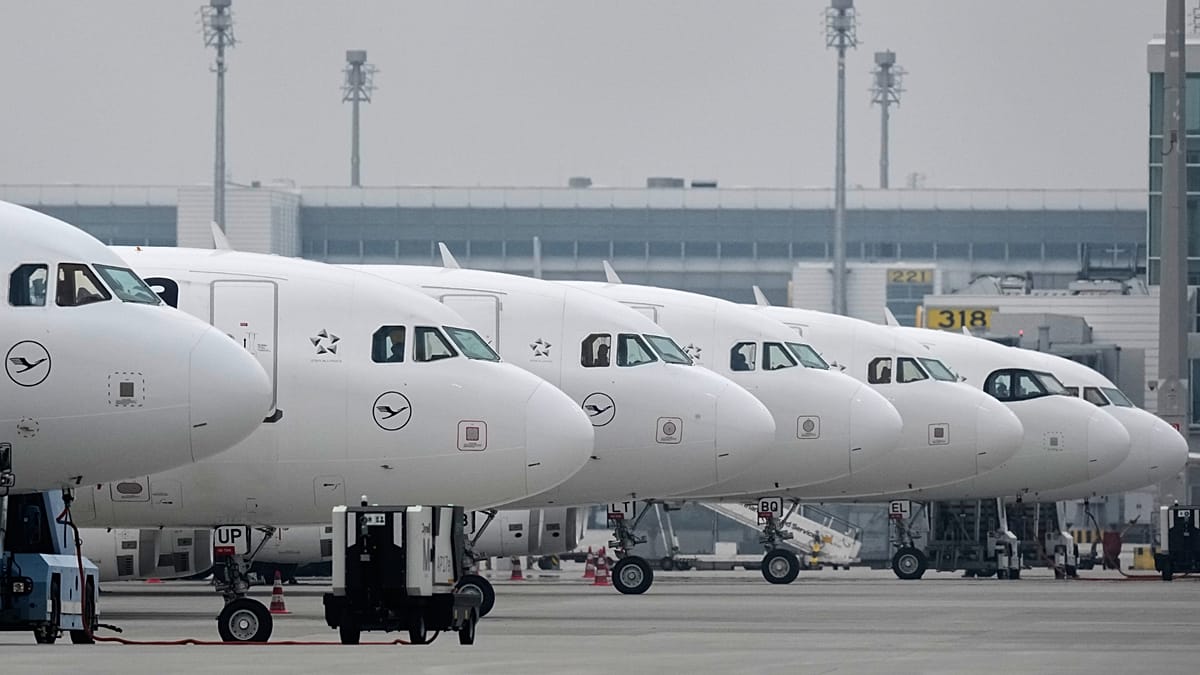
Munich Airport was closed twice within 24 hours in October after suspected drone sightings, briefly disrupting flights before operations resumed around 10:05 am. Police said two pilots reported a possible drone shortly after 9:00 am and authorities closed the runways in coordination with air traffic control. Emergency services found no threat to the public, but the repeated shutdowns highlight operational risk for aviation and travel.
The immediate market read is not about lost passenger revenue; it is about rising operating friction and the probability of repeated, low-grade disruption becoming embedded in airport security budgets. For European hub operators, the key second-order effect is higher inspection, perimeter, and ATC coordination costs, plus a small but persistent hit to schedule reliability that can push premium travelers toward rail on short-haul routes. That is negative for airport throughput elasticity: once travelers perceive a hub as intermittently unreliable, recovery in load factors tends to lag the actual security risk by weeks or months. The beneficiary set is less obvious. Defense and counter-UAS vendors gain a stronger procurement narrative, especially firms selling detection, jamming, and integrated airspace monitoring to governments and critical infrastructure owners. This is a classic “policy lag” trade: the catalyst is visible immediately, but budget conversion usually takes 2-4 quarters, meaning the equity impact accrues through contract awards and backlog rather than a one-day headline reaction. The risk is that the headline remains a nuisance rather than a material safety event. If incidents remain unresolved but non-calamitous, markets may overprice the near-term disruption while underpricing the longer-cycle security spend; conversely, a single successful interdiction or injury would shift the regime abruptly and likely trigger accelerated procurement across EU hubs within 1-2 quarters. Watch for copycat incidents at other airports: that is the key catalyst that would turn this from a local operational issue into a continental infrastructure-security budget theme. Contrarian view: consensus may be focused too much on aviation inconvenience and not enough on the fact that these events create optionality for defense exposure with asymmetric upside. The downside case for airlines and airports is real but modest unless events escalate, whereas the upside for counter-drone and perimeter-security suppliers can persist for years if Europe standardizes a higher-security operating baseline.
AI-powered research, real-time alerts, and portfolio analytics for institutional investors.
Request a DemoOverall Sentiment
mildly negative
Sentiment Score
-0.15
