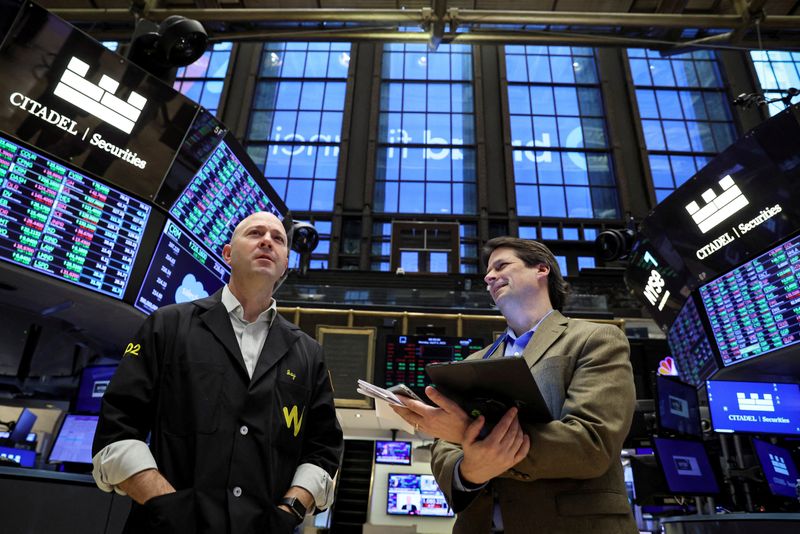
U.S. stock futures rose 0.2%-0.3% after the S&P 500 and Nasdaq closed at fresh record highs, with the S&P 500 topping 7,000 for the first time and the Nasdaq up about 1.6%. Gains were driven by optimism over potential U.S.-Iran negotiations and solid bank earnings, including Bank of America’s 17% quarterly profit increase and Morgan Stanley’s nearly 30% jump. The article points to improved risk appetite as investors weigh easing geopolitical tensions and a steady earnings backdrop.
The market is treating de-escalation in the Gulf as a rates-and-multiple event, not just an energy event. The immediate beneficiary set is quality growth and financials: lower headline oil volatility relieves the bond market’s inflation premium, which mechanically supports duration-sensitive tech, while the banks’ strong trading/dealmaking prints reinforce that capital markets activity is still healthy even with policy uncertainty. That combination helps explain why high-multiple equities can keep levitating even without a broad macro re-acceleration. The second-order effect is that the biggest loser from a successful diplomatic path may be the market’s existing defensive positioning, not just energy itself. If oil-risk premium bleeds out over the next 2-6 weeks, hedges built around stagflation, higher breakevens, and defense/energy overweights can unwind quickly, creating a squeeze in crowded cyclicals-like hedge baskets. For the named banks, a calmer macro backdrop matters because it preserves deal pipelines and reduces credit-spread pressure; that is more valuable than a one-day lift from trading revenue. The risk is a classic headline-reversal trade: any setback in talks can reprice crude and implied inflation within hours, but the broader equity impact should be asymmetric on the upside because positioning is likely still underweight risk assets after the prior geopolitical scare. The consensus may be underestimating how fast lower energy volatility can feed into lower equity risk premiums and tighter credit spreads over the next quarter. In other words, the true trade is not “peace = energy down,” but “peace = multiple expansion plus a vol crush,” which favors assets with long duration cash flows.
AI-powered research, real-time alerts, and portfolio analytics for institutional investors.
Overall Sentiment
mildly positive
Sentiment Score
0.35
Ticker Sentiment
