


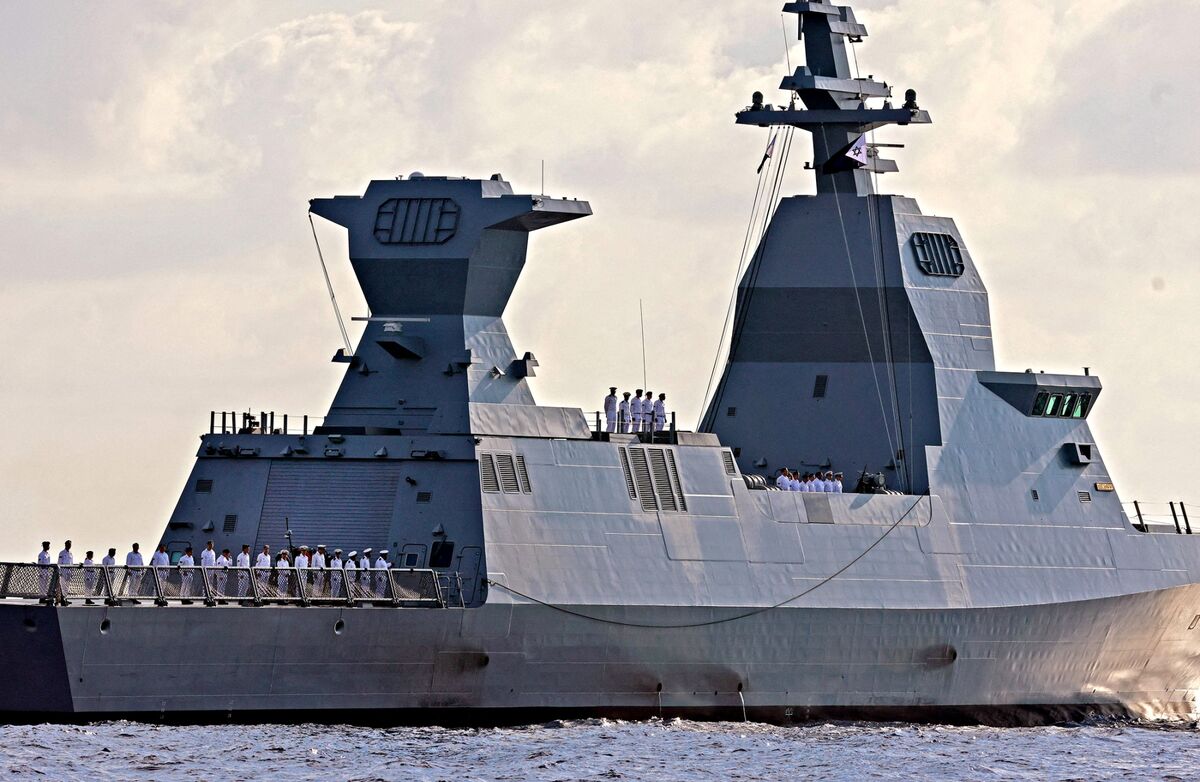
Israel’s navy plans to expand its fleet to secure vulnerable trade routes and protect offshore gas fields amid attacks tied to Iran and Hezbollah. The Saar 6 corvette “Independence” has intensified patrols—running over 4,000 sea hours in 2024 versus a typical 1,500 hours/year—with crews sometimes having only seconds to activate air defenses. The escalation risk to maritime energy and shipping corridors is likely to be sector-relevant, raising uncertainty for energy and trade-linked flows.
The market read-through is less about a single security event and more about a higher steady-state burn rate for maritime defense. Sustained operating intensity like this typically front-loads wear-and-tear, maintenance, and munitions consumption, which is how geopolitical stress turns into multi-quarter procurement demand for sensors, air defense, EW, and ship systems. That is constructive for defense suppliers with Israeli or US co-production exposure, but it is not an immediate P&L unlock unless the budget is amended or emergency orders are placed.
The second-order loser set is broader than the article suggests: any asset that depends on a low-friction coastal security premium—offshore gas, port logistics, marine insurance, and ultimately higher beta to regional risk premia. If the navy has to maintain permanent rather than episodic coverage, the state is effectively subsidizing a recurring protection tax, which can crowd out other spending or force delayed capital renewal elsewhere. That creates a cleaner relative trade in defense than in the broader Israeli industrial complex.
Contrarian view: consensus may treat this as another headline on regional volatility, but the operating-hour data implies strain on a small fleet that often precedes procurement rather than follows it. The thesis breaks if sea-hours normalize, if de-escalation persists for several months, or if budget language fails to convert urgency into orders. For retail/import names like TGT, there is no direct trade yet; only if this widens into sustained shipping/insurance inflation would landed-cost pressure matter.
AI-powered research, real-time alerts, and portfolio analytics for institutional investors.
Overall Sentiment
mildly negative
Sentiment Score
-0.35
Ticker Sentiment
