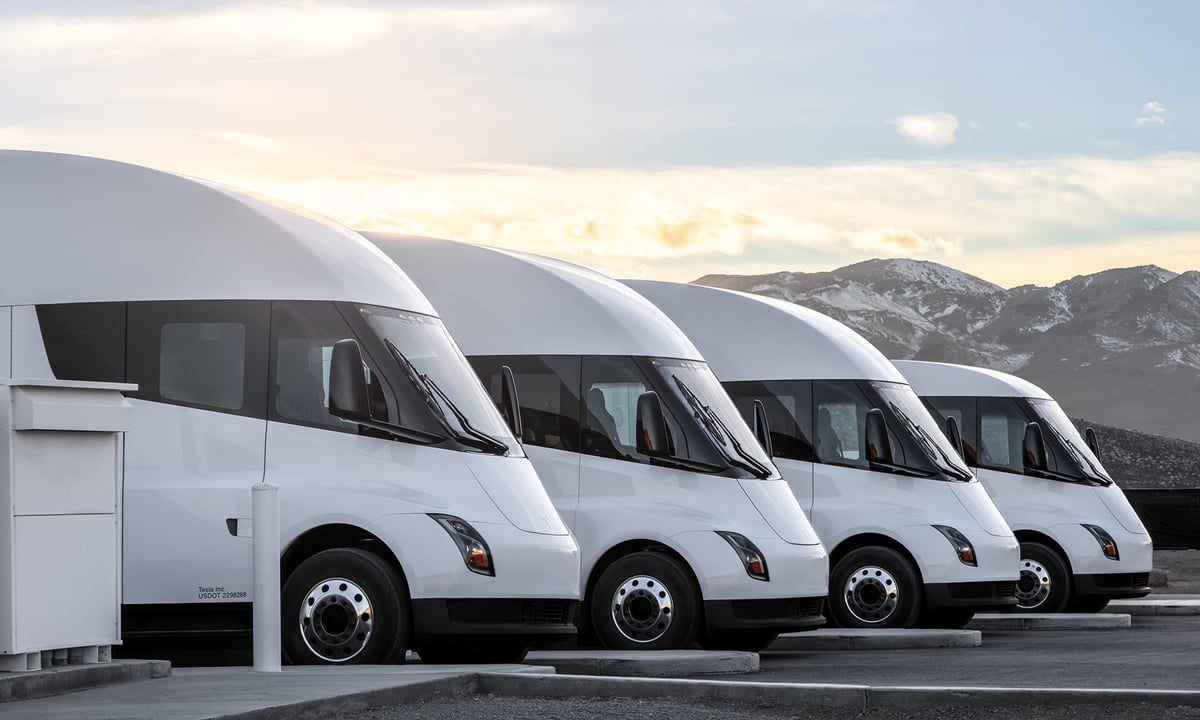
Tesla’s key growth catalysts — robotaxi, FSD, Semi, and Optimus — are framed as foundational rather than financially material this year, with Wall Street consensus putting the four initiatives at just 2% of 2026 revenue versus 12.9% by 2028. The article highlights that commercial ramp-ups are expected to be very slow, while broader FSD approvals and v15 software validation may not arrive until late this year or 2026. The message is constructive for 2027 and beyond, but near-term investor expectations should stay tempered.
The market is likely underpricing how much optionality sits in Tesla’s non-core initiatives once they become credible enough to be modeled as recurring businesses rather than demos. The key second-order effect is not 2026 revenue contribution, but multiple expansion: if investors start treating software, autonomy, and robotics as separable high-margin franchises, Tesla’s valuation can decouple from near-term auto delivery noise even before those lines matter financially. That said, the sequencing matters — the equity is still hostage to proof of product-market fit and regulatory permissiveness, and any miss on autonomy timelines would compress the whole duration trade. The most important catalyst path is probably FSD, because it can re-rate the stock without requiring manufacturing scale-up. Subscription retention and global approvals create a compounding base that can fund and validate the autonomy stack, while robotaxi and Optimus remain more binary and capex/operationally intensive. In other words, FSD is the de-risking layer; robotaxi and Optimus are the monetization layer. If FSD adoption accelerates into 2026, the market may begin capitalizing a higher software mix even if the headline revenue numbers still look modest. The contrarian miss is that consensus may be too linear on the ramp. The article frames 2027 as the real inflection, but the stock can move much earlier if Tesla demonstrates a closed loop: better FSD -> lower churn -> higher subscription revenue -> more data -> faster product approval. Conversely, the downside is not gradual underperformance; it is a reset in the entire autonomy narrative if v15 slips, regulators slow approvals, or Optimus fails to show credible manufacturability. That would push Tesla back toward a pure auto multiple with elevated execution risk.
AI-powered research, real-time alerts, and portfolio analytics for institutional investors.
Overall Sentiment
neutral
Sentiment Score
0.15
Ticker Sentiment
