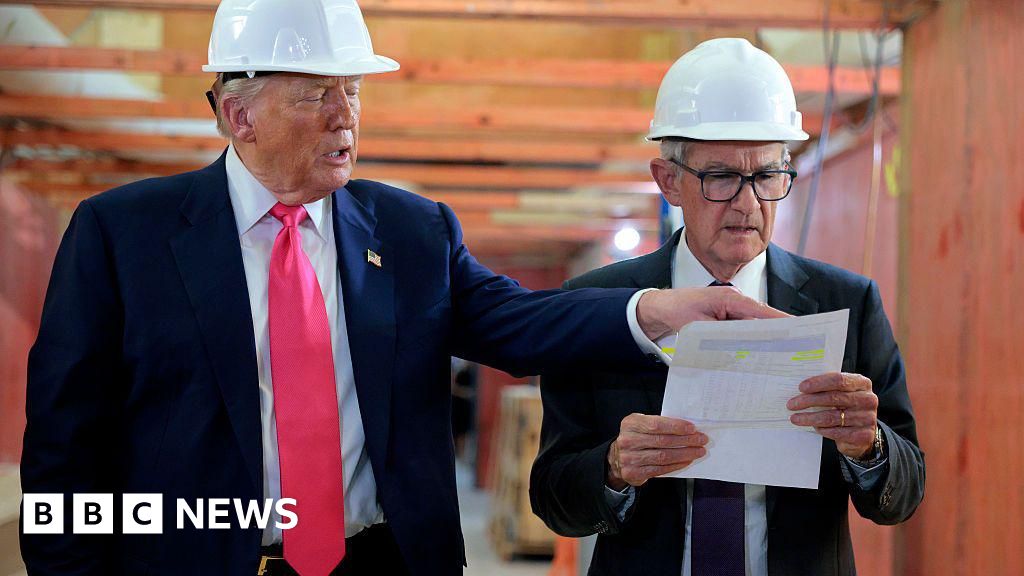
Trump threatened to fire Fed Chair Jerome Powell if he does not step aside when his term ends on 15 May, escalating political pressure on the central bank amid an ongoing dispute over interest rates. The article also notes potential Senate opposition to Kevin Warsh's confirmation, plus renewed scrutiny of the Fed building renovation probe. The risk of leadership disruption at the Fed is market-relevant and could affect rates, the dollar, and broader risk sentiment.
The market is likely underpricing the governance shock more than the policy shock. Even if rates are not immediately changed, a credible threat to central-bank independence raises the term premium, steepens the long end, and widens volatility in rates more than the front end; that is a classic setup for bear-steepening rather than a clean rally in duration. The first-order reaction should show up in 2s/10s and 5s/30s, but the larger move is in implied volatility: investors will pay up for rate protection if personnel risk becomes a recurring policy variable. The second-order winners are not obvious. Banks and brokers can benefit from a steeper curve and higher trading volumes, but only if equity and credit markets do not reprice disorderly; meanwhile rate-sensitive growth, REITs, utilities, and homebuilders face a higher discount-rate risk even if the policy rate itself stays unchanged. The USD is vulnerable on the margin because foreign reserve managers care less about the exact funds rate than about institutional credibility; that means the dollar can soften even without an imminent cut if the market assigns a non-trivial probability to a politicized reaction function. The key catalyst is the Senate confirmation path, not the headline threat. A protracted vacancy or an interim chair perceived as more dovish would be enough to pull forward easing expectations, but the opposite tail risk is a legal and political standoff that lifts uncertainty premia across rates and FX for months. The consensus may be too focused on whether Powell is actually removed; the tradable issue is that even a low-probability event can force dealers to hedge tail risk now, which can keep long-end yields and vol elevated longer than macro data alone would justify. Contrarian view: part of this is already in the tape after prior episodes of similar rhetoric, so chasing outright duration shorts is risky unless confirmation headlines turn concrete. The better expression is to own convexity and relative-value rather than directionally bet on a full institutional rupture. If the threat fades, the unwind should be fastest in volatility and the steepening trade, while the dollar and long-duration equities could mean-revert sharply.
AI-powered research, real-time alerts, and portfolio analytics for institutional investors.
Request a DemoOverall Sentiment
mildly negative
Sentiment Score
-0.35
