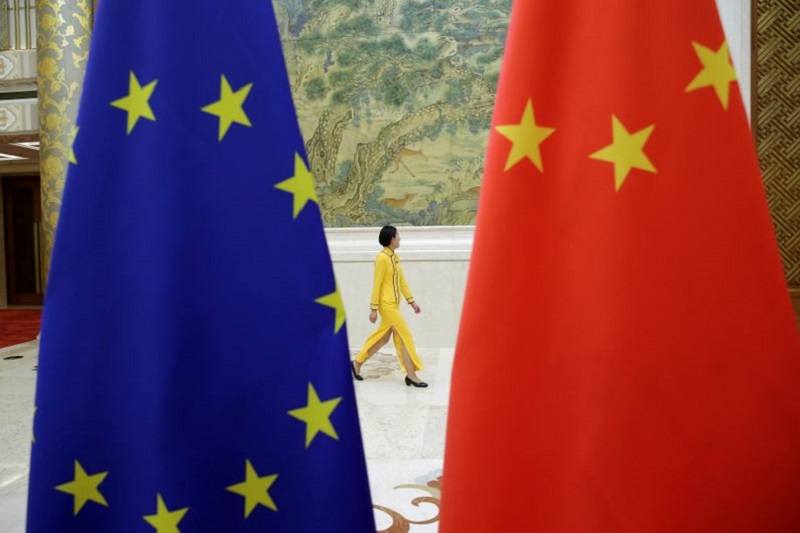
China warned it would take countermeasures if the EU introduces new trade restrictions targeting Chinese companies, escalating trade tensions ahead of planned economic dialogues. Beijing urged Brussels to follow WTO rules and avoid discriminatory measures, while the EU is taking a tougher stance over market access, subsidies, and economic security. The issue is primarily negative for China-EU trade relations and could affect cross-border supply chains and investment flows.
This is less about an imminent tariff headline and more about the gradual repricing of Europe/China industrial interdependence. The first-order impact is modest, but the second-order effect is a widening of the “policy tax” on cross-border capex: multinationals with China-linked supply chains will face longer procurement cycles, more localization spend, and higher compliance costs, which can compress margins even without a formal trade war. The biggest winners are firms with domestic or friend-shored production in Europe, especially mid-cap industrials and automation suppliers that can absorb substitution demand if Chinese inputs face scrutiny. Losers are European OEMs and consumer cyclicals with heavy China sourcing, because they get squeezed from both sides: potentially retaliatory access risk in China and higher input costs in Europe. In semis and capital goods, the second-order risk is not a single banned product but a slower approval process that delays orders and pushes revenue recognition out by 1-2 quarters. The timeline matters: headline volatility can hit in days, but earnings revisions will show up over months as procurement teams re-source and inventory buffers rise. A negotiated off-ramp is possible if Brussels narrows the scope to narrow sectors and Beijing limits retaliation to symbolic measures; that would likely cap downside in cyclicals and reduce the premium in defensive domestic names. The market is probably underestimating how quickly “consultation mechanism” language can become a de facto selective-embargo regime in strategic industries. Contrarian angle: the selloff in China-exposed European names may be too blunt if measures remain targeted rather than broad-based. If the EU aims only at a few strategic suppliers, the real alpha is in relative dispersion, not index shorts—owning companies that can pass through cost, have non-China sourcing, and sell into reshoring demand should outperform the obvious China losers.
AI-powered research, real-time alerts, and portfolio analytics for institutional investors.
Overall Sentiment
mildly negative
Sentiment Score
-0.25
