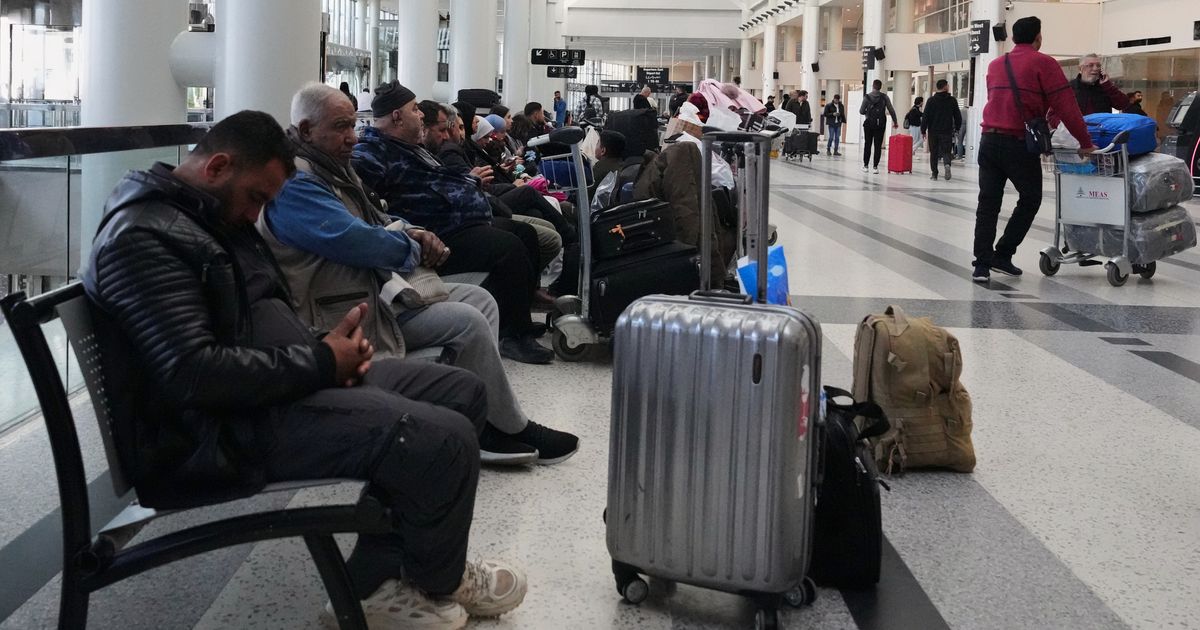
US and Israeli strikes on Iran triggered widespread Middle East airspace closures — including Dubai, Abu Dhabi and Doha — forcing suspension of services by major carriers (Emirates, Qatar Airways, Etihad), canceling over 1,800 flights and stranding hundreds of thousands of travelers; airports reported injuries and at least one death. The disruption requires significant rerouting that will add flight hours and fuel burn, reduce overflight fee revenues, and could push up ticket and jet-fuel costs while creating near-term risk-off pressure on travel, regional transport infrastructure and energy-linked markets if the conflict persists.
Market Structure — Winners are defense contractors and regional diversion hubs (Athens/Istanbul) that pick up diverted traffic; losers are Gulf carriers (Emirates/Qatar/Etihad) and long‑haul international capacity providers due to closed hubs and lost overflight fees. Expect a 3–7% unit‑cost hit for airlines operating Asia‑Europe routes from reroutes and extra fuel over the next 2–6 weeks, and implied vols for airline equities to spike 20–50% near term. Cross‑asset: oil/Brent likely +1–4% intraweek, USD/Treasuries bid (risk‑off), and credit spreads for airline IG/BB widen 25–75bps. Risk Assessment — Tail risks: escalation to multi‑week conflict (histor precedent: 12 days in June 2025) could amplify fuel and insurance cost shocks and force longer hub closures; regulatory actions (airspace closures) are binary catalysts. Immediate (days): operational cancellations and reroutes; short (weeks/months): weaker Q2 traffic, higher unit costs; long (quarters): demand reallocation if consumers shift itineraries. Hidden dependencies include Gulf hub transit revenue and airline fuel/hedge coverages; cargo chokepoints could raise freight rates and knock‑on supply‑chain inflation. Trade Implications — Direct: bias short DAL/UAL relative to AAL because DAL/UAL have larger international exposure; prefer option structures to limit capital: allocate 2–3% portfolio to 3‑month put spreads on DAL/UAL (buy 7–10% OTM, sell 15% OTM). Pair: long AAL equity (or buy 3‑month 5% ITM calls) vs short DAL for a 1–2% net exposure; defense longs (RTX or LMT) via 1–2% call spreads as geopolitical hedge. Exit/adjust when daily flight volumes through Mideast hubs recover to >80% of baseline or IV compresses by 30%. Contrarian Angles — Consensus underprices speed of operational normalization: authorities can re‑open segmented airspace within 24–72 hours once routes are deconflicted, so a large part of the IV premium is time‑decay. If airline IV decays 30% and cancellations fall <20% vs peak within 7–14 days, short volatility strategies (sell put spreads) become attractive. Historical parallels show sharp but short disruptions to global aviation; mispricing likely in domestically focused carriers (AAL) and in long‑dated bonds of airlines where credit deterioration is priced prematurely.
AI-powered research, real-time alerts, and portfolio analytics for institutional investors.
Request a DemoOverall Sentiment
moderately negative
Sentiment Score
-0.50
Ticker Sentiment
