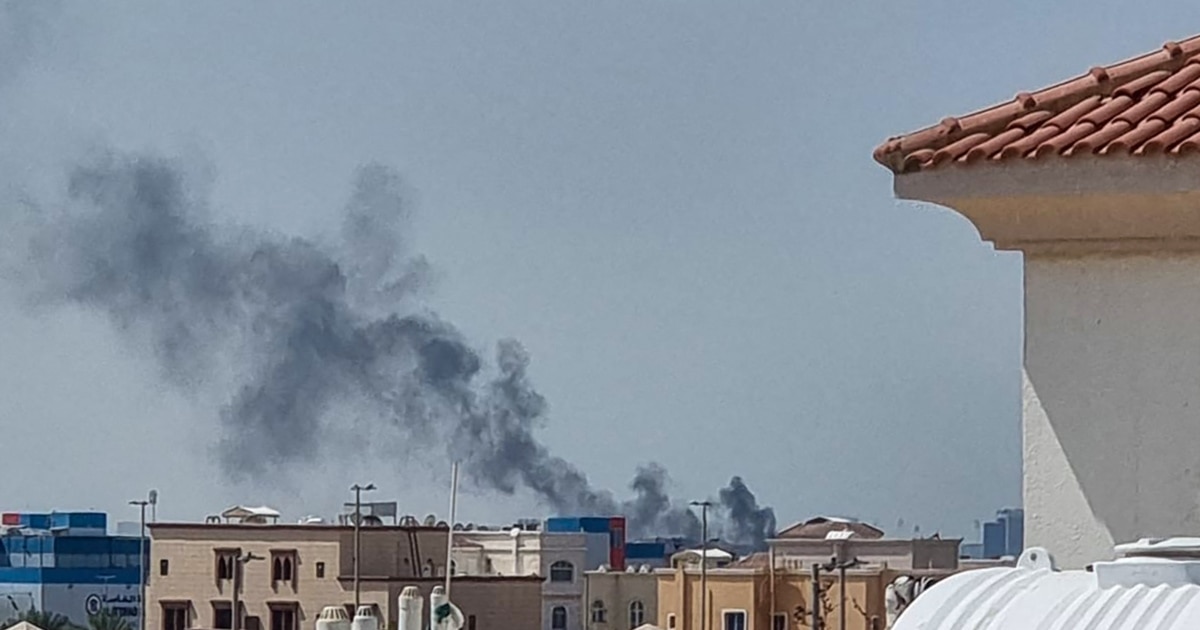
On Feb. 28 Iran launched missile strikes across several Middle East countries hosting US forces, with explosions reported in Bahrain, Abu Dhabi, Qatar and Saudi Arabia; the UAE reported one civilian death in Abu Dhabi and said its air defenses intercepted a subsequent wave. Iran's Islamic Revolutionary Guards Corps said it targeted the US Fifth Fleet in Bahrain, other American regional assets and Israel, while senior US officials reported no US casualties. The escalation follows President Trump's announcement of major combat operations with Israel and materially raises the risk of regional instability, likely driving near-term market volatility, upward pressure on oil and defense equities, and a flight to safe-haven assets.
Market structure: Immediate winners are defense primes (LMT, NOC, RTX, GD) and commodity safe-havens (GLD, physical oil ETFs/USO) as risk-off pushes yields lower and USD/UUP higher; losers are regional carriers (JETS, AAL) and Middle East-exposed real assets (UAE real estate, local banks). Expect 5-15% directional moves in oil and defense equities within days if strikes persist; insurance/shipping premia and freight rates will push cost curves up for global trade. Cross-asset: Treasuries/TLT bid, 2s/10s flatten, VIX likely to spike above 25-30 if escalation continues, FX: oil exporters’ currencies (SAR pegged, AED) hold but EMFX vulnerable. Risk assessment: Tail risks include Strait of Hormuz closure (low-probability, high-impact) that could add +$20–$40/bbl to Brent and trigger global growth shock; calibrated trigger thresholds to watch: Brent >$95 sustained for 5 trading days or VIX>35. Time horizons: immediate (1–7 days) = volatility trades, short-term (1–3 months) = tactical sector rotation, long-term (3–24 months) = defense capex re-rating and energy capex shift. Hidden dependencies: insurance premiums, maritime chokepoint disruptions, and US political escalation cycles; catalysts include OPEC+ production decisions and US/coalition military responses. Trade implications: Direct plays — establish tactical 2–3% long positions in LMT/NOC and 1–2% GLD exposure; buy 3–6 month RTX/LMT 10–15% OTM call spreads sized to 1–1.5% portfolio risk to cap premium. Pair trades — long LMT vs short JETS (ETF) 1:1 notional to express defense vs travel fallout. If Brent breaches $95 for 3 days, add 2–3% long XOM/CVX or 1–2% USO call spreads (Jun expiry, buy $85/$95 call spread for protection). Use stop-loss at 30% of option premium or 10% on equities. Contrarian angles: Consensus may overpay for large caps — defense names have already priced partial uptick; consider smaller missile/ISR suppliers (private or small-caps) with asymmetric upside but buy via 3–6 month LEAP calls. Oil rally could be transitory if strategic releases occur — prefer call spreads over naked longs to avoid theta bleed. Historical parallels (2019 tanker attacks) show spikes fade within weeks absent chokepoint closures; price levels and volatility mean wait for sustained breaches ($95 Brent/VIX>30) before adding material energy exposure.
AI-powered research, real-time alerts, and portfolio analytics for institutional investors.
Request a DemoOverall Sentiment
strongly negative
Sentiment Score
-0.65
