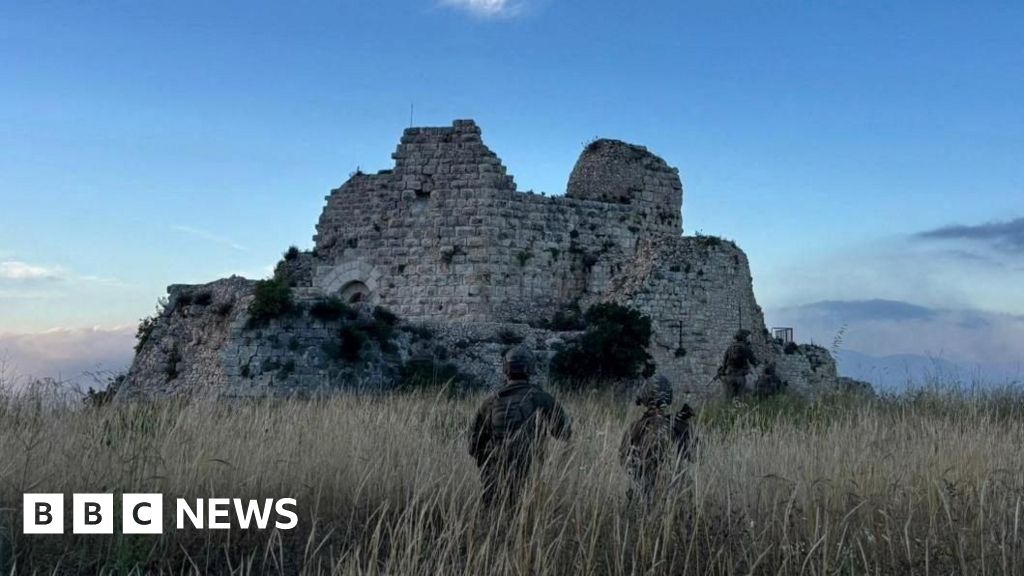
Israel has expanded its ground offensive in southern Lebanon, widening evacuation warnings to areas south of the Zahrani river and confirming the capture of Beaufort Castle near the Litani river. The military said a significant number of ground soldiers are involved and operations are expanding to additional areas, while Hezbollah continues drone and missile attacks. The escalation has already contributed to regional casualties, border-area school closures, and elevated geopolitical risk.
This is shifting from a contained border conflict into a deeper land-and-air campaign with a materially higher probability of infrastructure attrition across southern Lebanon. The market should think less about one-off tactical gains and more about a multi-week pattern of evacuation zones widening, logistics lines stretching, and Hezbollah’s ability to coordinate command-and-control under pressure degrading unevenly. That favors defense primes and ISR/electronic warfare suppliers more than pure munitions names, because persistent targeting and battlefield awareness become the binding constraint once the front broadens. The second-order risk is to regional risk premia, not just local assets: every incremental expansion raises the odds of miscalculation with Iranian interests, wider maritime disruption, or a pressure response on the Syria-Lebanon corridor used for resupply. The key catalyst window is days to 2-4 weeks, not quarters; the next meaningful inflection is whether the ground push stops at tactical high ground or extends toward denser population centers, which would force a larger Israeli reserve mobilization and amplify domestic political pressure. If negotiations in Washington become substantive, they can cap escalation quickly, but absent a verifiable ceasefire framework, the default path is escalation-by-steps. The contrarian point: the headline is risk-off, but the biggest near-term beneficiary may be suppliers exposed to counter-drone, precision strike, and air-defense replenishment rather than broad market hedges. A prolonged campaign also tends to expose stockpiles and production bottlenecks, which can be a medium-term positive for companies with secured backlog and U.S. replenishment exposure. The move is probably underpriced if investors still assume a short border flare-up; it is overdone only if diplomacy produces a credible de-escalation mechanism within days, which currently looks low probability.
AI-powered research, real-time alerts, and portfolio analytics for institutional investors.
Request a DemoOverall Sentiment
strongly negative
Sentiment Score
-0.78
