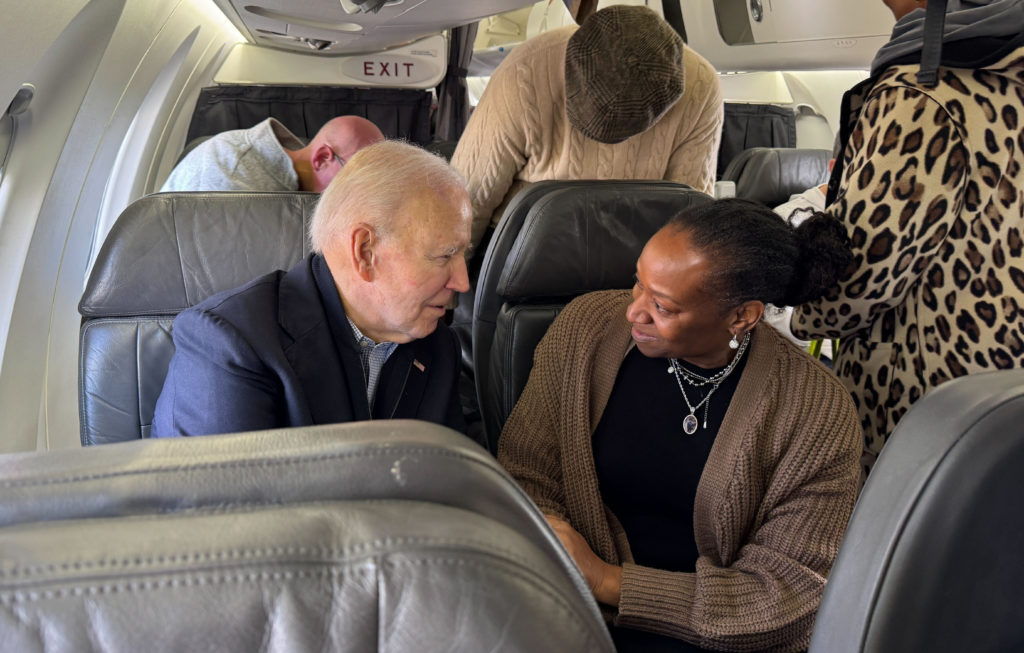
Former President Joe Biden flew commercially from Reagan National to Columbia, South Carolina, on Feb. 27, 2026, and was caught in an hourlong ground stop caused by fog, traveling with a visible Secret Service detail to attend a South Carolina Democratic Party event. Seated in a small first-class cabin, Biden engaged with fellow passengers, highlighting that while former presidents receive lifelong Secret Service protection under federal law, they no longer have guaranteed private travel arrangements; the report also notes his recent limited public schedule and disclosed prostate cancer treatment. The item is a human-interest political travel anecdote with negligible implications for markets.
Market structure: The anecdote reinforces that commercial carriers (American Airlines — AAL) remain central to domestic O&D travel and occasional PR tailwinds; regional/commuter capacity (short-haul first-class seats) and airport-dense hubs (DCA) benefit modestly while private charter demand could see marginal softening. Pricing power remains anchored to seasonal leisure/business cycles and fuel costs; expect capacity discipline to keep load factors within historical ranges (70–85%) into spring, limiting downside to yields absent a fuel shock. Risk assessment: Tail risks are operational (FAA ground stops, weather) and input-cost driven (jet fuel spike >15% QoQ) which would compress margins and widen airline credit spreads by 50–150bp; regulatory/security cost increases are low probability but would be multi-year drags. Immediate window (days): headline noise only; short-term (weeks–months): earnings, Easter/spring travel; long-term (quarters): structural demand recovery vs. fuel/labor inflation will determine profitability. Trade implications: Tactical exposure to AAL is sensible but size and hedges matter — equities for demand upside, option spreads to cap premium, and fuel hedges to limit input risk. Relative trades favor network carriers with hub strength in business-dense airports (AAL) over low-yield leisure carriers; watch catalysts: AAL monthly load factor reports, FAA delay metrics, and Brent >$90/bbl as action points. Contrarian angles: The market underestimates positive consumer PR from high-profile figures flying commercial — a small sentiment uplift that can support near-term ticket pricing in key corridors. Conversely, consensus may underprice the probability of clustered operational disruptions (seasonal storms) that can cause 5–10% quarterly revenue volatility; set explicit triggers (see decisions) rather than relying on narrative.
AI-powered research, real-time alerts, and portfolio analytics for institutional investors.
Request a DemoOverall Sentiment
neutral
Sentiment Score
0.00
Ticker Sentiment
