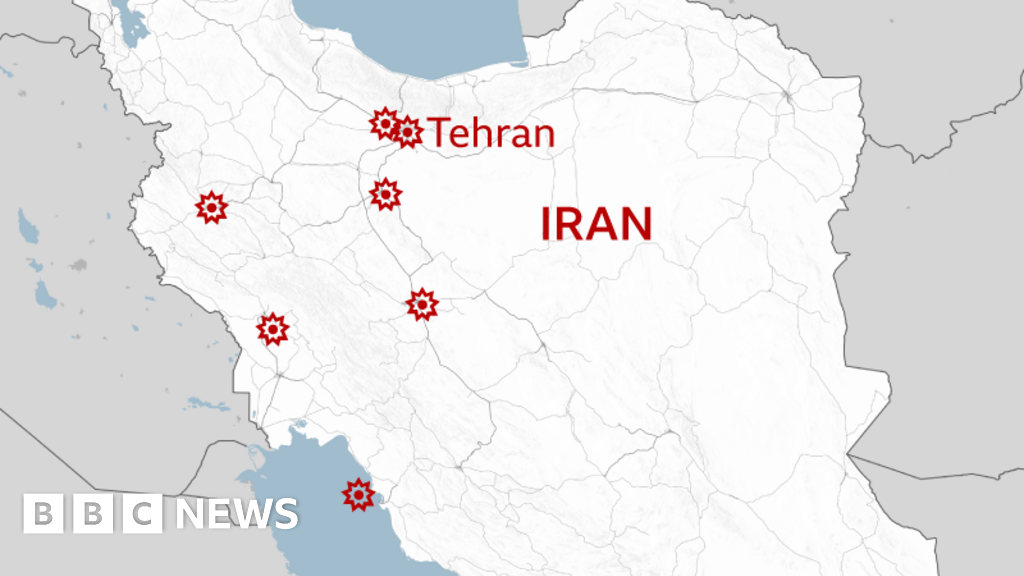
US and Israeli strikes have hit multiple targets across Iran, including damage to the compound of Supreme Leader Ayatollah Ali Khamenei in Tehran, the Narmak neighbourhood, the ministry of intelligence, and military sites in Kermanshah, Qom, Isfahan, Tabriz, Karaj and Kenarak; Iranian state media report at least 85 killed at a girls' school in Minab after three missile attacks. Iran launched retaliatory strikes against Israel and US bases across the region, with explosions or interceptions reported in Qatar, the UAE (one fatality), Bahrain, Kuwait (multiple ballistic missiles intercepted), and Jordan (two missiles shot down); Bahrain reported strikes on the US Fifth Fleet service centre. The strikes materially raise near‑term tail risks for energy markets, Gulf shipping and regional military exposure, with implications for oil prices, regional FX and risk premia—hedge funds should monitor oil, shipping routes and defence/insurance exposures and prepare for elevated volatility.
Market structure: Immediate winners are defense contractors (Lockheed Martin LMT, Northrop Grumman NOC, General Dynamics GD) and energy producers (Exxon XOM, Chevron CVX, XLE); losers are regional EM assets, airlines (JETS ETF, DAL, LUV), and container/shipping firms due to higher insurance and rerouting costs. Expect a near-term 5–20% risk-premium expansion in oil prices if shipping in the Gulf or the Strait of Hormuz is materially disrupted (1–3 mbpd shock scenario), pushing energy equities and commodity vol higher while pressuring consumption-sensitive sectors. Risk assessment: Tail risks include escalation to broader regional war, closure of shipping lanes (high-impact, <10% prob but severe), retaliatory cyberattacks on infrastructure, and rapid sanctions that freeze liquidity in targeted banks. Time horizons: days—volatility spikes and flight-to-quality; weeks—oil and insurance premia price in; quarters—defense budgets and capex reallocation; hidden dependency is insurance/P&I and re-route costs that can persist 3–9 months and raise freight rates materially. Trade implications: Implement barbell positioning—increase real-asset exposure (gold GLD, 1–2% target) and high-quality long-duration bonds (TLT, 1–3%) while shorting vulnerable cyclical names (airline ETF JETS, -1–2%). Use options to express tempo: buy 3-month Brent/WTI call spreads (target $85–$110) sized to represent 1–2% portfolio risk; pair trade long LMT (2%) vs short JETS (1%). Contrarian angles: The market may overshoot risk-off; EM equities (EEM) could be oversold by >10% in 2–6 weeks creating a mean-reversion opportunity once headline intensity fades. Historical parallels (1990 Gulf War, 2019 tanker attacks) show oil spikes are sharp but often mean-revert within 3–6 months; avoid over-rotating into long-duration defense without entry discipline and hedge inflation exposure if oil breaches $100/bbl.
AI-powered research, real-time alerts, and portfolio analytics for institutional investors.
Request a DemoOverall Sentiment
strongly negative
Sentiment Score
-0.70
