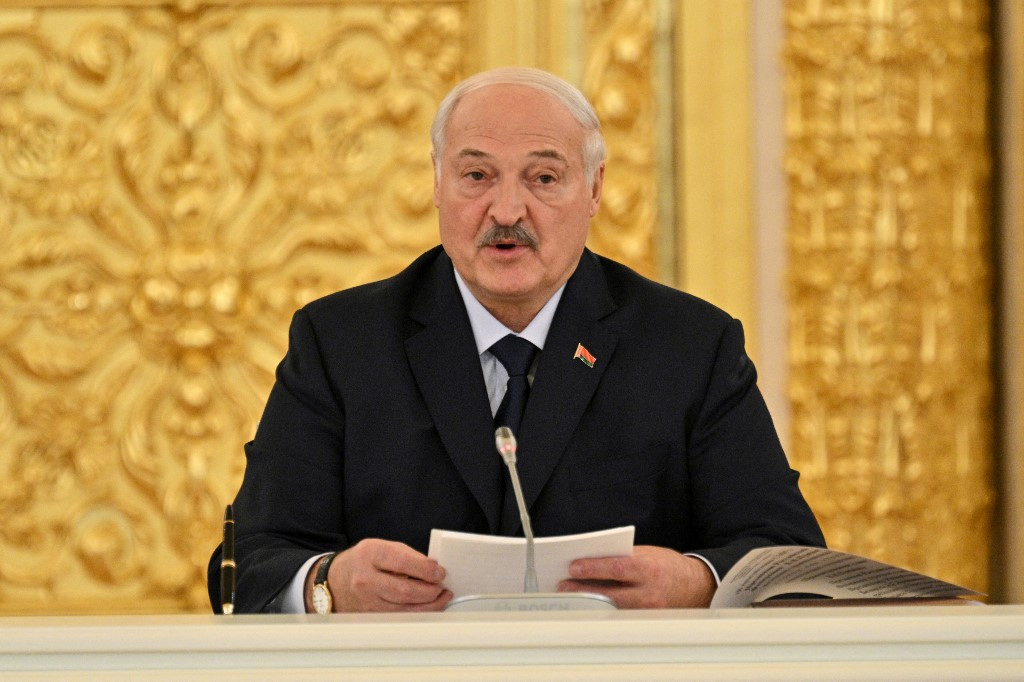
Lukashenko and Ukraine’s Unmanned Systems Forces exchanged direct threats after Ukraine said it had 500 Belarus-linked targets on its list, prompting Belarus to warn of a precision counter-strike. The article highlights elevated risk along Belarus’s 1,000-km northern frontier and the potential for escalation involving cross-border drone and missile capabilities. This is geopolitical escalation with broad regional risk implications, though no immediate market price data is cited.
The immediate market read is not about a literal Belarus-Ukraine escalation; it is about the probability of miscalculation forcing a higher readiness posture along the northern flank. That raises the implied cost of capital for any logistics, industrial, or infrastructure exposure with transit optionality through the Baltic/Belarus corridor, even if the direct military probability remains low. The more durable effect is on regional defense procurement: asymmetric drone threats tend to accelerate spend on EW, counter-UAS, short-range air defense, and distributed command-and-control rather than legacy platforms. The second-order winner is the ecosystem around sensing, jamming, and low-cost interceptors. If Ukraine’s drone model continues to demonstrate credible deterrence at low unit cost, the signal to other front-line states is that quantity and software-defined kill chains beat expensive hardware, which should keep budget share moving away from heavy armor toward sensors, comms, and expendables over the next 6-18 months. Belarus itself is economically too small to matter directly, but any perception that it could become a more active launch point increases insurance, rail, and route-diversion premia for northern Europe-linked trade flows. The contrarian point is that headline intensity may be peaking while actual operational escalation risk stays capped by mutual deterrence. Both sides are broadcasting capability for domestic and signaling purposes, so the trade is less about an imminent border event and more about sustained defense allocation and volatility in Eastern Europe risk premia. If rhetoric de-escalates without a kinetic incident, the most crowded defense names could give back quickly; the asymmetry is in buying dips on suppliers with visible backlog and avoiding pure headline beta. For KYIV specifically, the article is modestly negative in the near term because higher regional tension can lift war-related uncertainty and complicate sentiment, but it also reinforces the strategic value of Ukraine’s asymmetric posture. That means any selloff tied to escalation headlines should probably be viewed as tactical unless it begins to impair funding, logistics, or force generation over multiple weeks.
AI-powered research, real-time alerts, and portfolio analytics for institutional investors.
Request a DemoOverall Sentiment
moderately negative
Sentiment Score
-0.35
Ticker Sentiment
