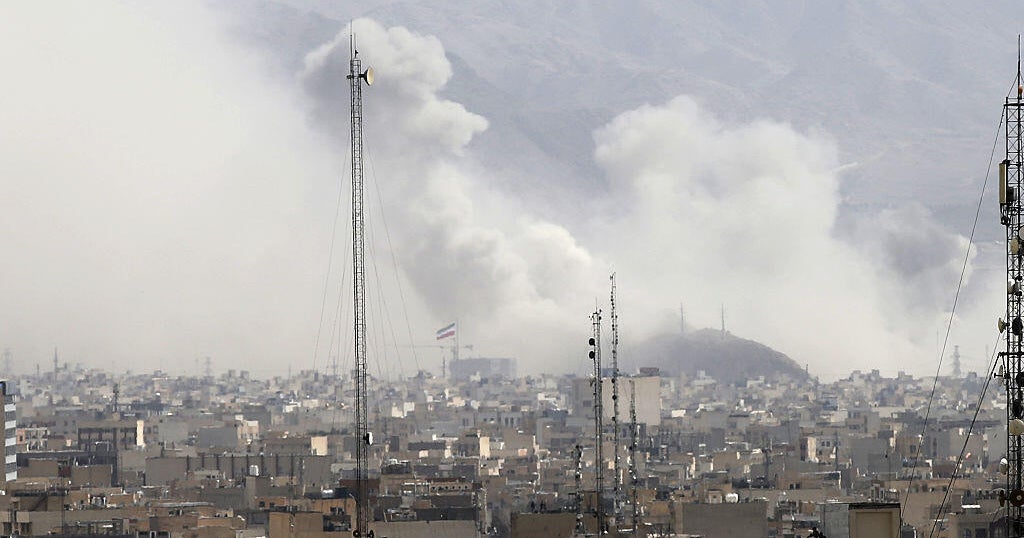
A CBS News/YouGov poll of 2,264 U.S. adults (Feb. 25-27, 2026; ±2.5 points) shows most Americans favor at least economic or diplomatic pressure on Iran and are split on U.S. military action after President Trump's Feb. 24 State of the Union; views shifted toward approval of military action to prevent a nuclear program but the public is divided and expects a protracted conflict. The survey finds broad public demand that Congress approve force, higher-than-average skepticism about the president’s framing of inflation, and that the economy is expected to slow or enter recession over the next year — factors that leave market-sensitive geopolitics and economic sentiment in a cautious posture.
Market structure: Near-term winners are defense contractors (LMT, RTX, NOC), oil & gas producers (XOM, CVX) and safe-haven commodities (GLD) as geopolitical risk premium and insurance/shipping costs rise; losers include airlines, tourism, and EM-growth assets sensitive to oil/FX shocks. Pricing power will shift to integrated energy and large prime defense suppliers where backlog and government emergency spending can be passed through; consumer cyclicals face margin compression if Brent sustains >$85/bbl for >30 days. Cross-asset signals: expect a classic risk-off pulse (USD and USTs bid, equities down) within days, but commodity-led inflationary pressure could push yields higher over weeks if oil stays elevated. Risk assessment: Tail risks include a prolonged regional war (high-impact: Brent>100, equities -10%), cyber attacks on US infrastructure, or escalation drawing in shipping chokepoints; probability low-medium but portfolio-critical. Immediate (0–7 days) is volatility spikes and liquidity squeezes; short-term (weeks–months) is commodity-driven inflation and fiscal/defense spending; long-term (quarters–years) is persistent higher defense budgets and re-shoring capex. Hidden dependencies: insurance premiums, shipping rerouting costs and sanction networks that can impair supply chains beyond crude. Key catalysts: measurable escalation (confirmed maritime interdiction, casualty counts) or Congressional authorization within 7–21 days. Trade implications: Implement small, event-driven positions not directional market bets: 3–6 month call exposure into large-cap defense and selective energy; hedge beta with UST longs or gold if equities drop >5%. Use pair trades to capture relative moves (long LMT vs short UAL) and options to cap downside (buy call spreads on XLE if Brent>75). Size conservatively (1–4% per idea), rebalance at 10–15% realized P&L or on de-escalation signals. Contrarian angles: Consensus may underweight inflation persistence — if oil stays >$80 for 60+ days, commodity and inflation trades outperform the short-lived “risk-off then rally” script. Defense rally can be front-loaded; avoid buying into near-term froth — favor 3–6 month call spreads rather than stock outright. Historical parallels (limited strikes 2019/2020) show fast mean-reversion; but 1979/1990-style supply shocks show multi-quarter commodity rallies — use objective triggers (Brent>90 for 30 days) to transition from tactical to strategic allocations.
AI-powered research, real-time alerts, and portfolio analytics for institutional investors.
Request a DemoOverall Sentiment
moderately negative
Sentiment Score
-0.40
