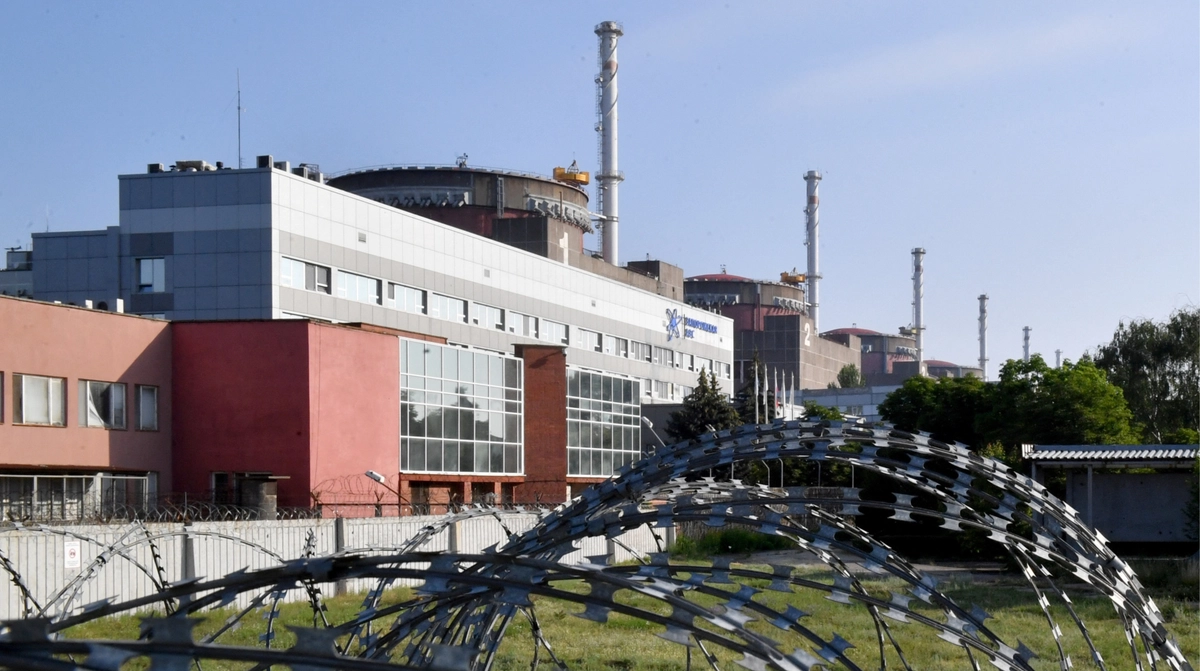
Ukraine’s defence forces denied Russian claims that a Ukrainian drone struck Unit No. 6 at the Russian-occupied Zaporizhzhia Nuclear Power Plant. Plant officials said radiation levels remain normal, with no disruption to technological processes, casualties, or critical damage. The incident underscores ongoing wartime risk around Europe’s largest nuclear facility, but the immediate operational impact appears limited.
This is less about the incident itself than about escalation management and narrative warfare around critical infrastructure. The immediate market read is that nuclear-specific headline risk in Eastern Europe remains a low-probability, high-tail event that can widen risk premia in European power, regional sovereigns, and industrials without requiring any physical damage to materialize. The first-order price impact should be limited; the second-order effect is that repeated allegations keep the market mentally anchored to a higher implied conflict duration, which supports defense, cybersecurity, and non-Russian energy security trades. The more important signal is that Russia appears to be testing a pattern: create ambiguity around nuclear safety, then use that ambiguity to justify force posture, sanctions narratives, or information operations. That raises the odds of a short-lived spike in volatility in European gas and power futures if any follow-up imagery, IAEA commentary, or Ukrainian counter-claims emerge over the next 24-72 hours. However, absent verified physical damage or off-site radiation changes, the move should fade quickly; the market has become desensitized to uncorroborated nuclear headlines, so the best risk/reward is around volatility rather than outright directional energy exposure. The contrarian view is that the real beneficiary is not broad defense, but contractors tied to C-UAS, perimeter security, and critical infrastructure hardening, because this kind of event increases procurement urgency without requiring a full-blown escalation. A less obvious loser is any European utility or industrial complex that still has exposure to regional power-price spikes: each incident reinforces optionality value for gas peakers and backup generation. Over a 1-6 month horizon, the bigger catalyst is whether this becomes part of a recurring pretext cycle before major geopolitical milestones; if it does, the risk premium migrates from headline-sensitive assets into longer-dated Europe exposure.
AI-powered research, real-time alerts, and portfolio analytics for institutional investors.
Overall Sentiment
mildly negative
Sentiment Score
-0.15
