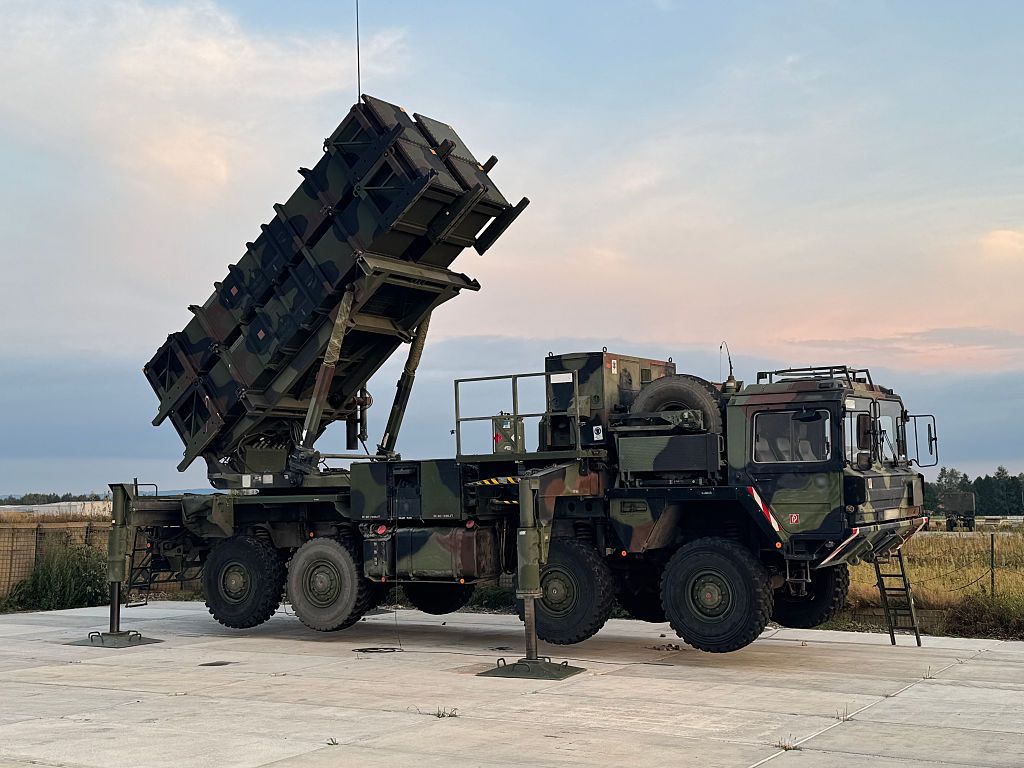
Ukraine’s supply of U.S.-made Patriot PAC-3 missiles is in a critical deficit, with President Zelensky warning the shortage “could not be any worse” and saying Middle East conflicts are further reducing aid prospects. He said Germany and Norway have recently added support to the PURL program, and Berlin agreed to supply PAC-2 missiles plus more IRIS-T launchers, but deliveries remain slow. The article also underscores the continued cutoff of U.S. aid under the Trump administration and Germany’s rising role as Ukraine’s largest strategic partner in Europe.
The key market implication is not just a Ukrainian battlefield setback; it is a stress test for the entire Western missile production stack. PAC-class interceptors are a bottlenecked, high-spec asset with long lead times, so any shortfall increases demand for adjacent air-defense systems, launchers, radars, munitions, and the industrial capacity to produce them. That pushes incremental budget share toward European contractors and away from purely U.S.-centric suppliers, especially if Washington remains politically constrained for several quarters. The second-order effect is a reallocation of European defense procurement: governments that expected U.S. backstopping will be forced to accelerate domestic stockpiling and co-production, which is structurally positive for primes with continental manufacturing footprints and for suppliers of missiles, seekers, propellants, and launcher integration. The strategic partnership/co-production angle also matters because it reduces the friction of future replenishment; over 6-18 months, the winning names are likely those with capacity expansion already underway rather than those selling on headline order intake alone. From a risk lens, the tail event is not an immediate collapse in Ukraine’s air defenses but a gradual erosion in intercept depth that raises the probability of occasional high-casualty strikes and forces more expensive interception choices. If the Middle East remains hot, the competition for air-defense inventory becomes a multi-theater allocation problem, and that is inherently bullish for pricing power but bearish for operational availability. Any sign of a U.S. policy reversal, supplemental funding, or a fast ramp in German PAC production would cap the trade quickly; the relevant horizon is months, not days. The contrarian point: the market may be underestimating how much of this is already a Europe-on-Europe reindustrialization story rather than a pure Ukraine aid story. If European governments treat this as a permanent inventory lesson, the spending impulse can persist even if the war de-escalates, which would make the current negative headlines a better entry point for defense exposure than a reason to fade it.
AI-powered research, real-time alerts, and portfolio analytics for institutional investors.
Request a DemoOverall Sentiment
strongly negative
Sentiment Score
-0.65
