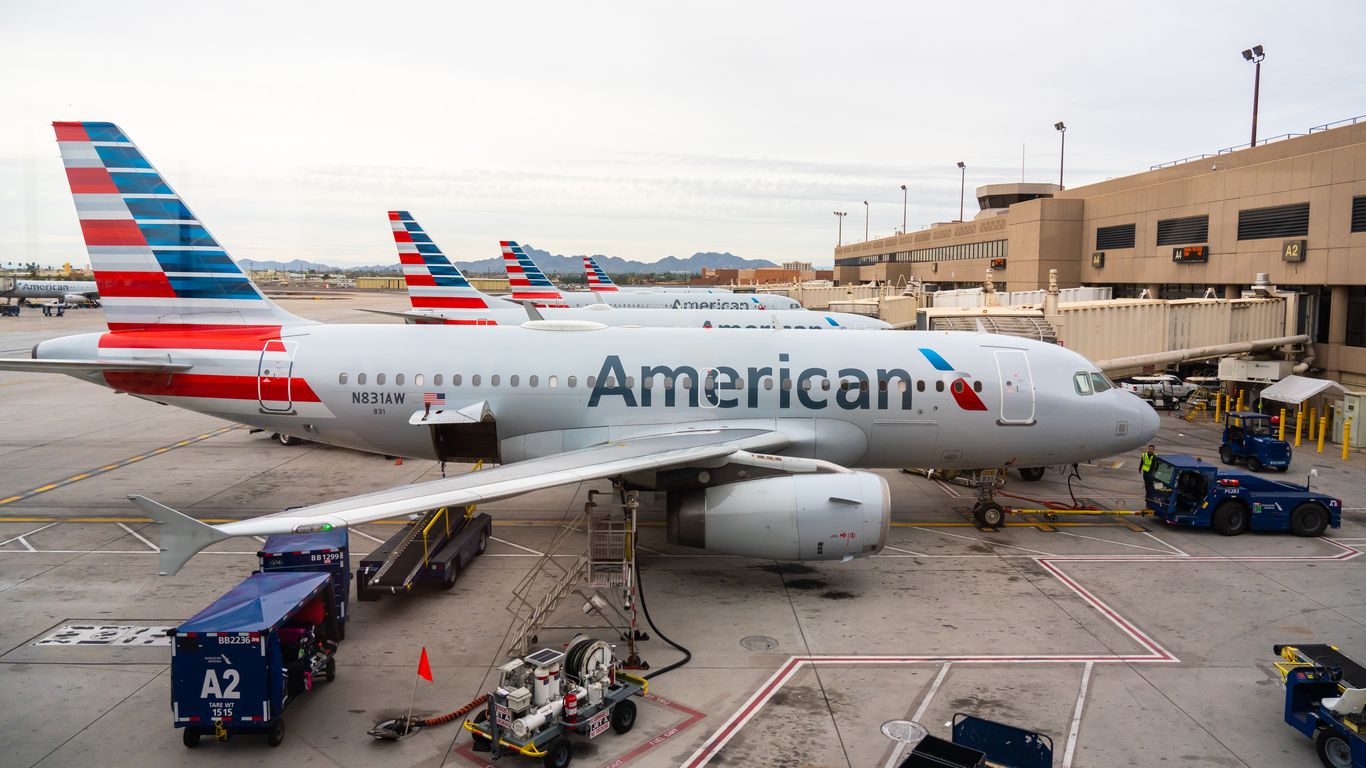
A potential United Airlines-American Airlines merger could put about one-third of U.S. air travel under one company, raising significant antitrust concerns and likely prompting regulatory scrutiny. Sky Harbor appears vulnerable because American operates about 40% of flights there while United is only about 6%, increasing the risk of route consolidation and reduced service in Phoenix. The article frames the deal as unlikely but potentially disruptive for passengers, fares, and airport service if it advances.
The market is likely underpricing how a forced combination would redistribute bargaining power across the network stack. If management ever got serious, the first-order equity winners would be the combined carrier and, paradoxically, the surviving “non-overlap” hubs that gain traffic concentration; the biggest losers are secondary hubs that look redundant to Denver, Chicago, Dallas, and Charlotte. Phoenix is especially exposed because it sits in the zone where two hub systems can be rationalized without materially impairing nationwide connectivity, so the real economic risk is not just lost headcount but a gradual reduction in bank structure, regional connectivity, and loyalty-program leakage over 12–24 months. The antitrust path is the key catalyst, but not in a linear way. Even a weakly signaled deal can pressure airline multiples immediately because investors will start discounting longer duration regulatory overhang, but the actual close probability remains low unless there is a major policy shift or a “public interest” framing that softens DOJ resistance. The more interesting second-order trade is that a failed process can still be bullish for the broader sector if it removes speculative optionality and forces capacity discipline; in that case, fares and yields could stay firmer for the remaining carriers while UAL/AAL underperform on headline risk and legal expense. The contrarian view is that the headline merger chatter may be more useful as a bargaining chip than a real transaction roadmap. If that is correct, the selloff in UAL and AAL could be temporary, while regional airport-exposed names and airport operators may be over-discounting a scenario that is still politically and legally remote. KR is largely a collateral signal only; its real relevance is as a reminder that this administration can be transaction-friendly at the margin, but that does not solve the structural antitrust problem in a two-to-three year airline consolidation case.
AI-powered research, real-time alerts, and portfolio analytics for institutional investors.
Overall Sentiment
moderately negative
Sentiment Score
-0.45
Ticker Sentiment
