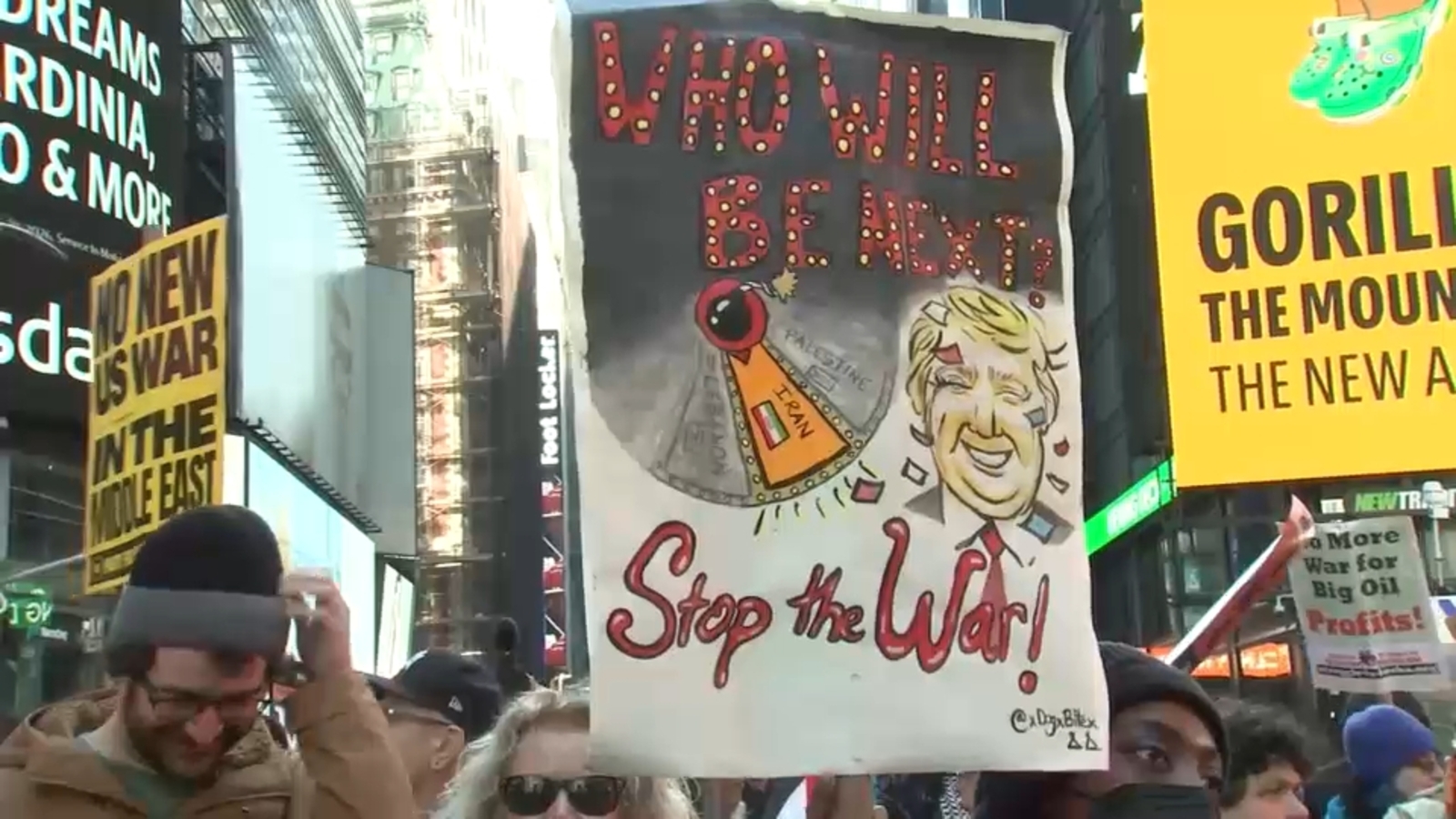
A joint U.S.-Israel strike on Iran has sparked international protests from New York's Times Square to London, with demonstrators and grassroots groups condemning the military action and citing humanitarian consequences and communications blackouts affecting relatives in Iran. The White House framed the operation as eliminating imminent threats and President Trump urged Iranians to capitalize on the moment, while domestic debate over war powers and calls to lift sanctions has resurfaced—an escalation that raises geopolitical risk premia and could pressure oil, defense, and risk-sensitive assets.
Market structure: Immediate winners are defense contractors (Lockheed Martin LMT, Northrop Grumman NOC, General Dynamics GD) and energy producers (Exxon XOM, Chevron CVX) from a likely short-term tightening in Middle Eastern oil flows; losers include commercial airlines (AAL, UAL), leisure/hospitality and Iranian-linked suppliers. Expect pricing power to shift toward producers and insurers (maritime/war-risk) for 2–12 weeks as spare capacity is tested and freight/insurance premia rise by an estimated 20–50% on specific lanes. Risk assessment: Tail scenarios include broader regional war or major shipping disruption driving Brent >$120/bbl within 1–3 months and an S&P drop of 10–20%; low-probability but high-impact cyberattacks on US infrastructure could create additional shock. Near-term (days) will see volatility spikes and safe-haven flows; medium-term (3–6 months) depends on Iran’s retaliation cadence, US troop movements and OPEC+ responses; long-term (>1 year) could embed higher defence budgets and accelerated energy security spending. Trade implications: Favor 1–3% tactical long positions in LMT/NOC and 1–2% in XOM/CVX, using 3-month call spreads to control capital; buy 2% GLD exposure and a 1% allocation to TLT as a hedge if 10Y yields fall >30bps. Use pair trades (long LMT, short AAL 1:1 notional) and buy VIX 30/60 call spreads (30–90 day) as cost-efficient tail insurance; scale in over 5–10 trading days. Contrarian angles: Consensus may overpay defense names and oil headlines in the first 2–4 weeks — historical parallels (post‑Soleimani 2020) saw 1–3 week risk-off followed by partial mean reversion. Underappreciated winners include marine insurers, selective commodity logistics plays and USD strength that could amplify EM sovereign/credit stress; price dislocations should be faded with disciplined stop-losses and volatility-weighted sizing.
AI-powered research, real-time alerts, and portfolio analytics for institutional investors.
Overall Sentiment
moderately negative
Sentiment Score
-0.45
