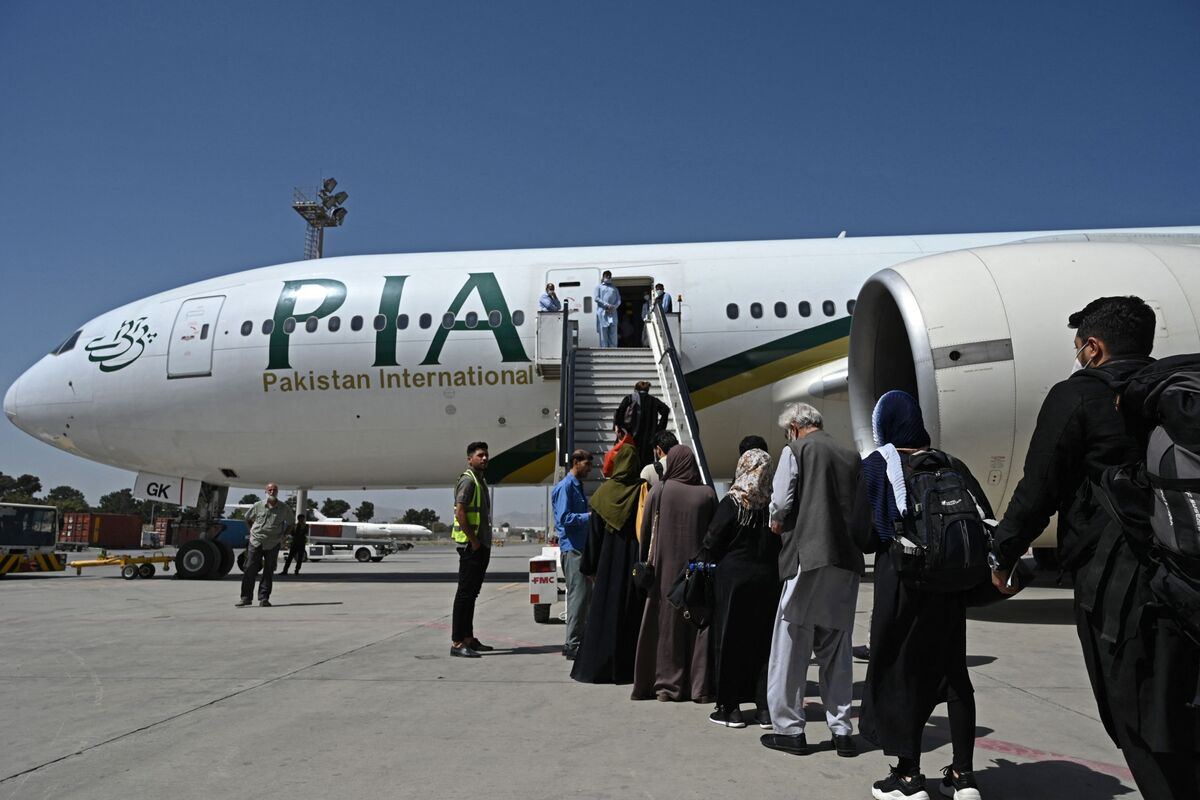
Pakistan is targeting an end-April handover of management control of Pakistan International Airlines to an Arif Habib Group-led consortium, with the timetable potentially slipping by one to two weeks بسبب the US-Iran war. The move is part of Islamabad’s effort to satisfy an IMF condition to privatize stakes in state-owned firms. The article is largely procedural and policy-driven, with limited immediate market impact beyond Pakistan’s privatization and sovereign-risk narrative.
The near-term market signal is not the airline itself but the sovereign credibility layer beneath it. A credible privatization handoff, even for a distressed asset, is a marginal positive for Pakistan’s policy premium because it improves the odds of IMF disbursement discipline and reduces the probability of another FX/liquidity squeeze over the next 1-2 quarters. The key second-order effect is on funding costs: if the handover proceeds cleanly, Pakistan’s quasi-sovereign credits and any future FX-linked funding channels should trade tighter on reduced execution risk; if it slips, the market will likely read it as a broader reform fatigue signal rather than an isolated aviation delay. The geopolitics angle matters more than the headline suggests. A delay tied to regional conflict is not just logistical noise; it raises the chance that buyers demand larger escrow buffers, indemnities, or deferred payment terms, which could convert a clean sale into a highly levered restructuring. That would be negative for domestic banks and local capital markets if the government must bridge value leakage or backstop working capital to keep the carrier functioning through the transition. The consensus risk is overestimating how much a change in control can fix. Airline turnaround value typically comes from fleet rationalization, route pruning, and labor restructuring over 12-24 months, not from the ownership transfer itself; until those steps are visible, the asset is more of a governance test than an operating catalyst. The contrarian read is that a successful handoff may actually be mildly bearish for incumbents in Pakistan’s travel ecosystem because a better-capitalized operator could reclaim domestic share and pressure weaker secondary carriers, airport-services vendors, and local leasing counterparties. From a trading standpoint, this is best viewed as a policy-event fade unless confirmed by funding and execution details. The risk/reward improves only if the transaction closes with minimal state support and a clear post-close restructuring plan; otherwise, the market should treat the announcement as a headline-positive, fundamentals-neutral event with a high probability of slippage.
AI-powered research, real-time alerts, and portfolio analytics for institutional investors.
Request a DemoOverall Sentiment
neutral
Sentiment Score
0.05
