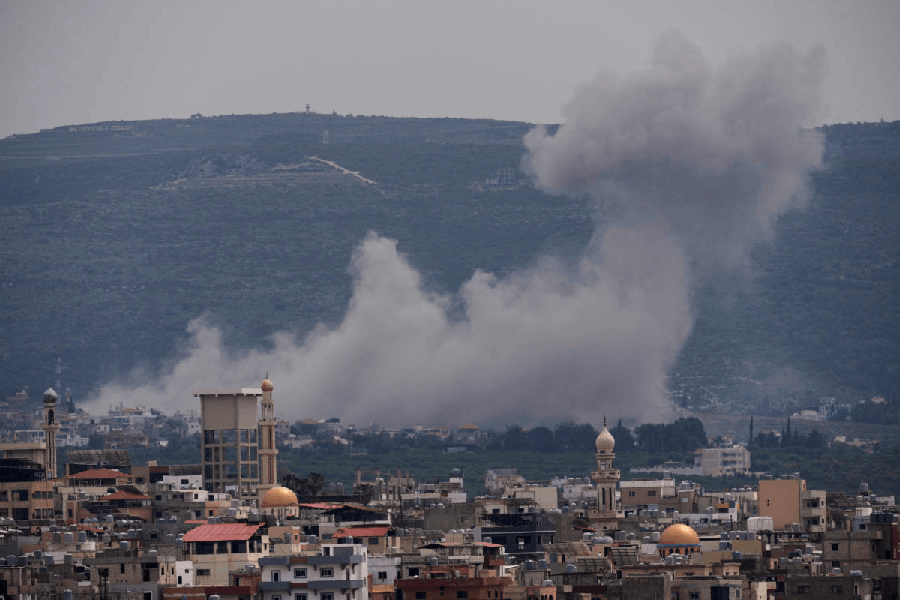
The article centers on escalating U.S.-Iran tensions, with reports of a U.S. blockade of Iranian sea trade, no formal ceasefire extension yet agreed, and fresh threats of military pressure and sanctions enforcement. Trump said oil prices should drop sharply once the Iran war ends, while U.S. officials said ceasefire talks continue and Iran signaled no confirmed extension date. The situation is highly market-sensitive, especially for oil, shipping through the Strait of Hormuz, and broader Middle East risk assets.
The market should treat this less as a binary ceasefire headline and more as a rolling squeeze on the physical crude balance. Even without a formal escalation, a de facto blockade regime in the Gulf of Oman/Hormuz raises the odds of voyage delays, insurance repricing, and precautionary stockpiling across Asia; that tends to lift prompt barrels more than deferred ones and steepens backwardation. The biggest second-order winner is not just upstream producers, but anyone with floating storage, compliant tonnage, or flexible feedstock access. The more interesting setup is that the administration appears willing to keep sanctions pressure high while talking up a diplomatic off-ramp. That combination usually supports near-dated energy volatility while capping the duration of any one-way move, because any credible progress in talks can unwind the risk premium quickly. In other words, this is a better volatility trade than a clean directional oil bull trade unless transport disruption becomes visible in tanker data and refinery runs. The underappreciated loser is global manufacturing and transport, especially Asian importers that are exposed to higher delivered energy costs before crude itself fully reprices. If the Strait regime tightens, expect the first-order effect to be freight, marine insurance, and refined-product cracks rather than just Brent; that can hit airlines, chemicals, and industrials with a lag of 2-6 weeks. The contrarian read is that much of the geopolitical premium may already be embedded if the market believes diplomacy is still alive, so the real trade is on dispersion: upstream and shipping outperform, while energy-intensive cyclicals underperform. Catalyst risk runs in both directions over days, not months: any verified detention of a tanker or disruption to AIS flows could spike implied vol immediately, while a credible prisoner/exchange or asset-unfreeze framework would deflate it fast. The key reversal condition is not rhetoric, but whether commercial flows keep moving without material delays. If they do, this becomes a headline-driven fade; if they don’t, the market has to price a sustained logistics tax on every barrel moving through the Gulf.
AI-powered research, real-time alerts, and portfolio analytics for institutional investors.
Request a DemoOverall Sentiment
mildly negative
Sentiment Score
-0.35
