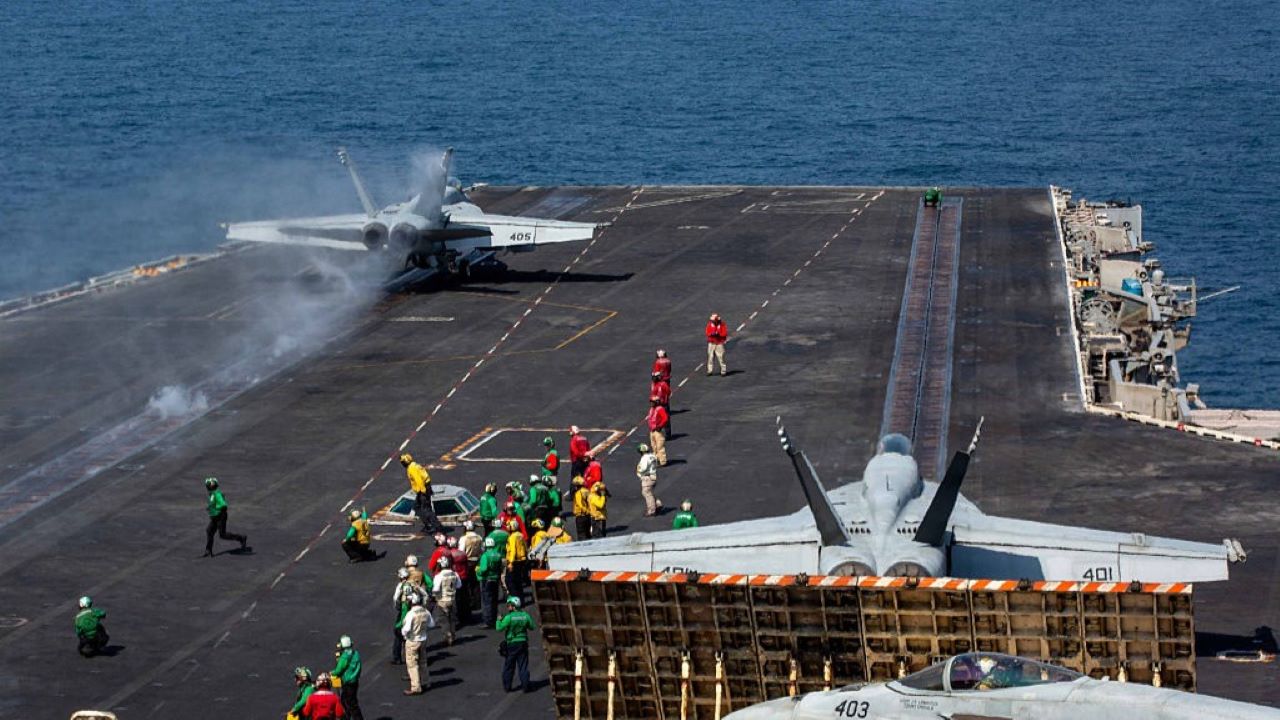
The U.S. is maintaining a naval blockade on Iranian ports while peace talks are set to begin, keeping the Iran conflict highly fluid and raising near-term geopolitical risk. Trump said the war is "very close" to ending and claimed gas prices should fall "tremendously" once it does, but the blockage and stalled talks leave oil and shipping routes around the Strait of Hormuz under pressure. The article also highlights tariff threats tied to China, possible satellite-imagery security concerns, and renewed debate in Washington over Trump's handling of the conflict.
The market is likely underpricing how much of this is a shipping-insurance and sanctions-enforcement story, not just a headline war premium. Even if crude retraces on a ceasefire headline, a blockade/turn-back regime keeps a latent scarcity option on barrels moving through the Strait of Hormuz, which matters more for spot freight, tanker utilization, and regional export optionality than for outright global supply unless the standoff widens. That favors owners with low leverage and modern fleets while pressuring operators exposed to Gulf liftings, interruption insurance, and rerouting costs. The more interesting second-order effect is on China-linked supply chains: if Beijing is perceived as enabling Tehran, the U.S. has a ready-made justification for tariffs, export controls, and tighter port/security scrutiny. That creates a broader risk-off for Asia-exposed industrials and semis even if oil itself falls, because the market would be repricing policy escalation rather than just energy supply. In that setup, the real loser is not only energy-intensive transport, but any company dependent on smooth cross-border clearance and predictable trade volumes. Contrarian view: the consensus is likely extrapolating a short, dramatic conflict into a lasting oil shock, but the administration is simultaneously signaling an exit ramp. If talks re-open, the fastest trade will be in vol, not direction: front-month crude and tanker rates can gap violently, then mean-revert once traders conclude physical flows are not being interrupted at scale. The risk is asymmetric over days, not months—watch for a sharp drop in geopolitical premium if a negotiation framework emerges, even while structural sanctions noise remains elevated.
AI-powered research, real-time alerts, and portfolio analytics for institutional investors.
Overall Sentiment
mildly negative
Sentiment Score
-0.35
Ticker Sentiment
